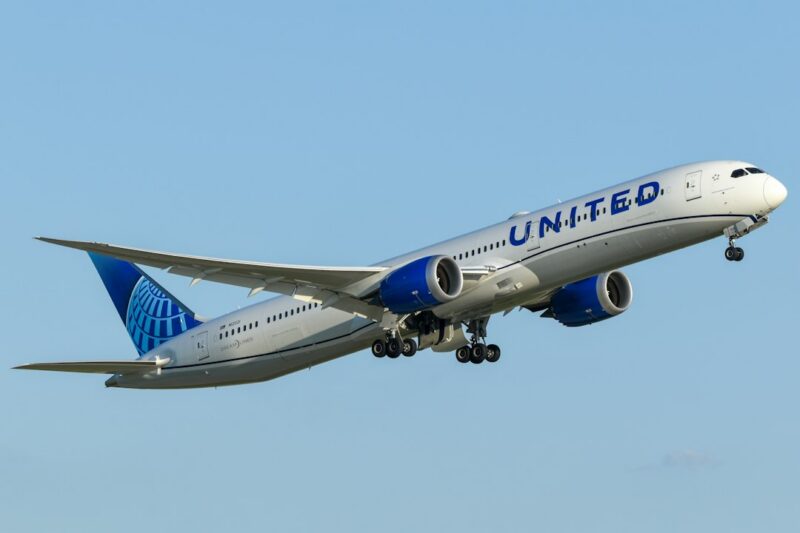
A one-way business class seat from Newark to London priced anywhere between 80,000 and 395,000 United miles across the date ranges AwardFares searched in August 2026. That spread is the entire 2026 MileagePlus story, and the answer it points to is simple: book United metal through United, especially if you hold a United card, and price partner metal through Air Canada Aeroplan before you move a single point.
Elevate Miles Verdict
United MileagePlus is now two programs wearing one name: a dynamically priced engine for United-operated flights, where a co-branded card buys you at least 10% off and access to Polaris Saver seats other members cannot see, and an unpublished partner pricing table that is usually beaten by Aeroplan’s fixed chart on the identical Star Alliance seat. Keep United miles for United metal and short-notice trips you may need to cancel, since award changes and cancellations are free. Move flexible points to Aeroplan when the plane belongs to Lufthansa, SWISS, Austrian, ANA or EVA — but only after you have the seat on screen.
Three structural things happened to this program between August 2025 and April 2026, and together they changed how a MileagePlus balance should be spent. The free stopover died. The upgrade chart was pulled. And the whole program got split down the middle between cardholders and everyone else. What follows is what awards actually cost now, where the partner programs still undercut United on the same metal, and the rule of thumb I use before deciding whether to book direct or transfer out.
Why United No Longer Publishes an Award Chart — for Its Own Flights or Partners
United removed its published award chart for its own flights years ago in favor of dynamic pricing, and the partner side followed. As of AwardFares’ August 2026 update, there is no current United award chart for United-operated or partner-operated flights, which means any regional table you find — including the ones labeled “2026 award chart” — is an observation of what someone was quoted, not a program rule you can hold United to.
That matters more than it sounds. With Aeroplan, a chart number is the number: the program prints a fixed partner price by zone pair and distance band, and that is what you pay. With United, the price is generated at the moment you search, and it moves with demand, cabin, routing, date, passenger count and — since April 2026 — who is logged in. United’s own award terms state plainly that award pricing is subject to change without notice.
“Saver” is now an availability label, not a price
The old Saver-versus-Everyday framework still shows up in United’s booking system, but it no longer means what it did when there was a chart behind it. Saver is capacity-controlled inventory priced below United’s higher dynamic tiers — it is not a promise that two flights on the same route will cost the same number of miles, and it is not a guaranteed regional minimum.
Underneath, United manages award space through booking classes: X is general economy Saver inventory, XN is expanded economy Saver, I is general premium Saver and IN is expanded premium Saver. The expanded buckets are the ones tied to your account — eligible Premier members and primary cardmembers can see space a signed-out search will never show you. If you have ever had a friend tell you a seat exists and then failed to find it yourself, that is usually the explanation, not a glitch.
 elevatemiles

Newsletter
Travel using fewer points with advanced strategies
I send what is actually worth acting on: new transfer bonuses, award space worth booking, and the mistakes that quietly cost people their points.
Free forever · unsubscribe in one click
What United Awards Actually Cost in 2026
Since there is no chart, the only honest way to describe United pricing is with observed ranges and their date basis. AwardFares ran broad date-range searches for one traveler in August 2026 and published what came back. These are search results, not minimums, and taxes sit on top of every number.
| Route (one-way) | Economy observed | Business observed | What the search showed |
|---|---|---|---|
| Newark–London (EWR–LHR) | 40,000–120,000 | 80,000–395,000 | A United nonstop at 80,000 on one date; partner connections from 88,000 |
| San Francisco–Tokyo Haneda (SFO–HND) | 55,000–450,000 | 110,000–900,000 | Lowest full-business result was a nonstop ANA award at 110,000 |
| Boston–Paris (BOS–CDG) | 41,200–120,000 | 88,000–395,000 | Partner business undercut United’s own options, but required a connection |
| San Francisco–London (SFO–LHR) | 40,000–125,000 | 80,000–400,000 | The 80,000 results were mixed cabin; full partner business began at 88,000 |
| Chicago–Denver (ORD–DEN) | 13,500–65,000 | 30,000–100,000 | Several nonstops clustered at the low end |
Look at the top of those business class ranges before you look at the bottom. A 395,000-mile quote is not a typo — it is what the dynamic engine returns when United would rather sell you the seat for cash. The practical implication: a MileagePlus balance has no fixed purchasing power, and treating 100,000 miles as “a business class ticket to Europe” is how people end up disappointed in March for a July trip.
The partner side, from actual bookings
AwardWallet compiled partner award pricing from its own users’ bookings rather than from a chart, and the most common one-way business class rates from the continental U.S. landed at 88,000 miles to Europe (with a low of 73,000 and a high of 110,000), 88,000 to the Middle East and Africa, and 110,000 to North Asia, Australia and New Zealand. Partner economy to Europe most commonly priced at 44,000.
There was a brief, genuinely good moment here worth knowing about, because it is still misreported. In early November 2025, United quietly dropped partner business class to Europe from 88,000 to 80,000 miles, ANA to Japan from 110,000 to 100,000, and Air New Zealand from 110,000 to 100,000 — roughly a 9% cut. Within a week it was walked back for most members: AwardWallet’s November 11, 2025 update to that story reported the lower prices remained visible only to United Premier members. If you are a general member reading a post that promises 80,000-mile partner business to Europe, that is why your search disagrees with it.
The 2026 Changes That Actually Move the Math
Cardholders now get a hard-coded discount
From April 2, 2026, eligible primary United cardmembers pay at least 10% fewer miles on United and United Express award flights booked from the cardmember’s own MileagePlus account. A primary cardmember who also holds Premier status pays at least 15% fewer — that is 15% in total, not 10% stacked with another 15%. The discount does not extend to partner awards, Money + Miles redemptions or taxes, and the no-annual-fee United Gateway Card only activates it after $10,000 in qualifying calendar-year spend. All of this is spelled out on United’s What’s New with MileagePlus page.
The bigger benefit is the one that is harder to see. In its February 19, 2026 announcement, United said about a third of flights with Saver Award space carry inventory reserved for cardholders and Premier members, and gave a worked example: Polaris business Saver seats priced as low as 80,000 miles would price from 72,000 for a general-status cardholder and 68,000 for a Premier cardholder. United also said cardholders save about 30% on average when booking under the “Cardmembers Save” banner compared with standard award pricing. Expanded access plus the discount is a materially different program from the one a card-free member sees.
Upgrades opened up, then got a 2027 expiry date
As of February 1, 2026, PlusPoints and Complimentary Premier Upgrades can be applied to award tickets for all Premier members, which previously was not allowed. That is a real win on a mid-tier award booking. The counterweight: United has signaled that from February 2027 the fixed PlusPoints upgrade chart retires in favor of dynamic pricing, so the predictable chart applies through the end of 2026 and no longer after that.
What you lost, with dates
- Excursionist Perk — ended for new award bookings on August 21, 2025. It added a free one-way segment inside a region on a qualifying multi-city award. Existing bookings were honored, but changing one can forfeit the pricing. Any guide still building 2026 itineraries around it is describing something that no longer exists
- Instant confirmed upgrades on full-fare Y, B and M economy tickets for eligible Premier members — also gone on August 21, 2025, replaced by the standard Complimentary Premier Upgrade waitlist
- The MileagePlus upgrade award chart — removed from United’s site on November 24, 2025, with mileage upgrades priced dynamically from that date
Aeroplan, for what it is worth, still runs its own version of the free-segment idea in the form of a stopover for 5,000 extra points on an international award, which is a direct reason the Excursionist crowd migrated north.

The Same Star Alliance Seat, Priced Four Ways
Here is the thing people miss about dynamic pricing: it does not change which seats exist. A Lufthansa business cabin releases the same award inventory to every Star Alliance program. What changes is the price each program attaches to it, and in 2026 all four of the main options repriced within about seven months of each other. The ranking below is specific to U.S. departures to Western Europe in business class.
| Program | U.S.–Western Europe business, one-way | Pricing model | The catch |
|---|---|---|---|
| Air Canada Aeroplan | 60,000 pts under 4,000 miles flown; 75,000 pts in the 4,001–6,000-mile band from June 1, 2026 | Fixed partner chart by zone and distance | CAD $39 partner booking fee, and change or cancel fees that United does not charge |
| United MileagePlus | Most commonly 88,000 miles on partner metal; 80,000 visible to Premier members since the November 2025 reversal | Dynamic, no published chart | Price can differ by account, date and passenger count on the same flight |
| Turkish Miles&Smiles | 85,000 miles to Europe 1, 90,000 to Europe 2 on the partner chart checked September 28, 2026 | Fixed region chart | The 45,000-mile figure still circulating online is stale — verify in Turkish’s own search |
| Avianca LifeMiles | Roughly 81,290 on SWISS, Austrian and TAP, and about 92,400 on United metal after the spring 2026 repricing | Unpublished region bands, repriced without notice | Third devaluation in roughly 15 months; identical searches can return different prices |
Aeroplan is still the default, but it got more expensive on June 1
Air Canada’s own announcement confirms exactly what moved for tickets booked or reissued on or after June 1, 2026. Between North America and the Atlantic zone, the 4,001–6,000-mile band — which covers most U.S. cities to most of continental Europe — went from 70,000 to 75,000 points in business and from 100,000 to 120,000 in partner first. The shorter 0–4,000-mile band was left alone in business, so East Coast gateways into Western Europe still price from 60,000 points.
Transpacific took the heavier hit, and here the commonly repeated version is wrong. Plenty of coverage said the shorter North America–Pacific bands survived intact. Air Canada’s own update lists the 5,001–7,000-mile band moving from 75,000 to 85,000 points in business, and the 7,501–11,000-mile partner band from 87,500 to 102,500. That second one is the Toronto, Vancouver and West Coast gateway to Tokyo, Seoul, Taipei and Singapore band, and 15,000 extra points each way is 30,000 on a round trip. Our LOT business class review walks through what an Aeroplan transatlantic booking looks like end to end, including the mixed-cabin trap on positioning legs.
LifeMiles is no longer the automatic undercut
LifeMiles spent a decade as the cheapest way into Star Alliance premium cabins, and that is the part most sites have not updated. Thrifty Traveler documented the spring 2026 repricing — its third in just over a year — with one-way United-operated awards to Europe going from 40,000 to 48,400 miles in economy and from 80,000 to 92,400 in business, a 15% to 21% jump. Business class on SWISS, Austrian and TAP rose from as low as 55,000 to as high as 81,290 each way. Newark to Cape Town in economy went from 55,000 to 66,550.
LifeMiles still has two genuine advantages: it adds no carrier-imposed fuel surcharges on partner awards, and LifeMiles+ subscribers get up to 10% off Star Alliance redemptions. It also still runs frequent buy-miles promotions, which is the mechanism that made it famous. But the pricing is inconsistent enough that the same itinerary can quote differently depending on how you search it, and that is a bad property in a currency you have to transfer into irreversibly. If you are weighing which currency to feed, searching every program at once across a year of planned trips beats checking them one at a time in four browser tabs.
Turkish and ANA: read the current chart, not the famous one
Turkish Miles&Smiles deserves a correction rather than a recommendation. The widely quoted “45,000 miles to Europe in business” number is out of date: Turkish’s published partner chart, as checked against its official tables in 2026, prices North America to Europe partner business at 85,000 miles for Europe 1 and 90,000 for Europe 2. Turkish also devalued its domestic partner awards on December 3, 2025 without notice, taking direct same-country partner redemptions to 15,000 miles in economy, 22,500 in business and 30,000 in first — which gutted the cheap United domestic sweet spot that was the main reason most Americans held the currency.
ANA Mileage Club remains the quiet cheap option on several Star Alliance routes, with the structural catch that its partner chart is round-trip only, so it works for a return itinerary and not for a one-way. Watch the cash side on ANA bookings too — AwardWallet flagged unusually high taxes and fees on certain partner redemptions through the program, which can erase the mileage saving. Separately, Virgin Atlantic Flying Club has priced ANA business from the U.S. West Coast to Japan far below either Star program, at 52,500 Virgin points in AwardWallet’s November 2025 reporting, though Virgin has repriced partner awards without notice before — verify it live rather than planning around it.
If those numbers do not work against the balance you actually have, see what your points open up on Roame before you force a redemption that only looks good because it is the one you already researched.

Before you book: check the award space
Search millions of award seats across airlines, and get alerts when the flights you want become available.


 +80
Free to search · alerts are paid · partner link
The Rule of Thumb: Book Direct or Transfer Out
Strip away the detail and it comes down to one question you can answer in two seconds: whose name is on the side of the plane?
- United or United Express metal → book direct with MileagePlus. This is where the April 2026 cardmember discount applies, where the expanded Polaris Saver inventory lives, and where United’s free award changes and cancellations are worth real money. No other Star Alliance program can price a United seat below a discounted cardmember rate on a Saver date
- Partner metal → price Aeroplan first, then United. A fixed 60,000 or 75,000-point Aeroplan business award will usually beat an 88,000-mile United quote on the same Lufthansa or Austrian flight. Aeroplan also takes transfers from Amex, Chase, Capital One and Bilt at 1:1, so most people can actually reach the number
- The itinerary might change → lean United. United advertises no-fee changes and cancellations on award tickets. Aeroplan charges change and cancellation fees, and transferred points are gone for good. On a speculative booking eight months out, that flexibility can be worth the mileage premium
- You are a general member with no United card and no Premier status → you are the worst-priced customer in the program. Price out at least two partner programs before spending MileagePlus miles on anything international
- Never transfer first. Confirm the seat is bookable in the destination program, for your real passenger count, then transfer. Transfers from Chase, Amex and Capital One are irreversible, and dynamic award space can disappear inside the transfer window
There is an opportunity-cost layer under all of this. Flexible points held at Chase or Amex are insulated from any one program’s chart change; the moment they land in MileagePlus or Aeroplan, you own that program’s devaluation risk alone. Four Star Alliance currencies repriced between December 2025 and June 2026. That is the argument for transferring late and in exact amounts, and our breakdown of the math behind transfer bonuses covers how to size the move so a bonus does not leave you stranded mid-booking.
How to Search a 2026 Transatlantic Business Award Without Wasting Miles
The sequence matters more than the tool. Run it in this order every time.
- Find the seat before you find the price. Award inventory is the binding constraint, not your balance. Scan broad date ranges and multiple gateways in one pass, then narrow. When you have a fixed route and fixed dates, search the flight on Seats.aero rather than clicking through programs individually
- Filter out mixed cabins. An 80,000-mile “business” result with a long economy segment is not a business class ticket. AwardFares’ August 2026 data found several of those at the headline price on both SFO–LHR and EWR–SFO
- Search signed in, in the account that will book. Cardmember pricing and expanded Saver inventory do not appear to a signed-out search, and comparing the two is the fastest way to see whether a card is doing anything for you
- Price it in Aeroplan on the same morning. Same flight numbers, same cabin, same date. Note the partner booking fee and any change fees alongside the point total
- Check the cash fare before you decide. If the cash price for the same flight divided by the miles required lands below about 1.5 cents per mile, pay cash and keep the miles
- Then transfer, then book. Chase Ultimate Rewards and Bilt both move to United at 1:1, and Chase transfers to United post instantly, but instant is not the same as risk-free when the seat is one of four
Timing is its own lever. United’s award booking calendar is commonly observed to open around 337 days before departure, which is shorter than several partner programs — our award seat release calendar has the program-by-program windows, including why Lufthansa long-haul business does not appear to partners until about 85 days out no matter which program you hold. If your Europe dates are firm and nothing is showing, that release schedule is usually the reason, not a sold-out flight.
One last habit worth building: check whether a transfer bonus is live before you move anything, because a 20% or 30% bonus changes which program is cheapest for the exact same seat. Our transfer bonus tracker carries the current month’s offers plus the full history, which is also how you learn which programs bonus often enough to be worth waiting for. And if the trip is still unformed — you have the points but not the destination — mapping the whole region at once beats guessing at city pairs. For a broader look at where Star Alliance still clears, our business class sweet spots roundup ranks the redemptions by value per point, and the Cape Town award breakdown shows the same United-versus-partner comparison run on an ultra-long-haul route.
Which Card Is Right for You?
- Get a United co-branded card if you fly United metal more than a couple of times a year — the at-least-10% award discount and the cardholder-only Polaris Saver inventory are now the difference between two versions of the program, and United’s own example showed 80,000-mile Polaris Saver seats pricing from 72,000
- Get the Chase Sapphire Preferred if you want one balance that reaches both sides of this comparison — Chase Ultimate Rewards transfers 1:1 to United and 1:1 to Aeroplan, so you can decide after you see the seat instead of before
- Look at an Amex or Capital One card if your redemptions skew to partner metal — neither transfers to United, but both reach Aeroplan and LifeMiles at 1:1, which is where partner awards are usually cheapest
- Skip the United card if you fly United once a year on basic economy, because the annual fee will outrun a 10% discount you apply to one ticket
Frequently Asked Questions
Does United MileagePlus still have an award chart in 2026?
No. United does not publish a current award chart for its own flights or for partner-operated flights, and its award terms state that pricing can change without notice. Any chart you see online is a compilation of observed prices, which is useful for setting expectations but is not a rate United will honor.
Is the Excursionist Perk really gone?
Yes. United ended the Excursionist Perk for new award bookings on August 21, 2025. Bookings made before that date were honored, but changing one afterward can cause the pricing to be lost. Aeroplan’s 5,000-point stopover on international awards is the closest working substitute in Star Alliance today.
How much is the United cardholder award discount actually worth?
At least 10% fewer miles on United and United Express awards for eligible primary cardmembers, and at least 15% in total for a primary cardmember who also holds Premier status, effective for tickets issued from April 2, 2026. It does not apply to partner awards, Money + Miles or taxes. The expanded Polaris Saver inventory that came with it is often worth more than the percentage.
Is Aeroplan always cheaper than United for Star Alliance partner flights?
Not always, but usually on transatlantic business class. Aeroplan prices the 0–4,000-mile North America to Atlantic band at 60,000 points in business and the 4,001–6,000-mile band at 75,000 as of June 1, 2026, against a most common United partner rate of 88,000 miles. Factor in Aeroplan’s CAD $39 partner booking fee and its change and cancellation fees, which United does not charge on awards.
Should I still be using Avianca LifeMiles for Star Alliance awards?
Selectively. After its spring 2026 repricing — the third in roughly 15 months — one-way United-operated business awards to Europe moved to about 92,400 miles and partner business on SWISS, Austrian and TAP rose to as much as 81,290. LifeMiles still charges no fuel surcharges on partner awards and discounts Star Alliance redemptions by up to 10% for LifeMiles+ subscribers, so price it, but do not assume it wins any more.
Why do two people see different prices for the same United award?
Because United prices by account as well as by flight. Eligible primary cardmembers receive the award discount, Premier members and cardholders can see expanded Saver inventory in the XN and IN booking classes, and passenger count changes results. Always run the final search signed in to the account that will actually book.
When should I pay cash instead of using United miles?
Divide the cash fare for the identical itinerary by the miles required, after subtracting award taxes. If the result lands below roughly 1.5 cents per mile, cash is the better deal and your miles are better saved for a Saver-level date. Dynamic pricing means this calculation has to be rerun for every booking rather than memorized.
Bottom Line
MileagePlus in 2026 rewards two kinds of people: United cardholders flying United metal, who now get a built-in discount and inventory nobody else can see, and anyone disciplined enough to price the same partner seat in Aeroplan before spending a mile. Everyone else is paying the dynamic-pricing premium without noticing. Keep your points flexible, confirm the seat before the transfer, and let the name on the aircraft decide which program books it.