We just got back from six nights in Aruba, and instead of parking ourselves at one Palm Beach resort like most people, we split the trip between two Hyatts: three nights at Hyatt Place Aruba Airport, then three nights at the Hyatt Regency Aruba Resort Spa and Casino. The point-cost math and the geography both drove that decision, and honestly, I would do it again in a heartbeat.
Elevate Miles Verdict
If you’re going to Aruba on points, split your stay. Three nights at Hyatt Place Aruba Airport is a cheap, comfortable, centrally located base for exploring the south side of the island (Baby Beach, Mangel Halto), then move up to the Hyatt Regency for the Palm Beach resort experience. You’ll save five figures in points versus staying at the Regency the whole time, and you’ll actually see more of the island.
Here’s the thing about Aruba that most trip reports gloss over — the island is roughly 20 miles long, and the best beaches are spread across both ends. If you post up on Palm Beach for a week, you’re driving 45+ minutes each way every time you want to see the south coast. Splitting the stay gave us a base at each end and cut down the daily driving significantly. This is the full breakdown of what we did, what we spent in points, what worked, what didn’t, and every beach we hit along the way.
Why We Split the Stay: The Points Math and the Geography
Aruba only has one on-points Hyatt option that most people know about — the Hyatt Regency on Palm Beach. But as of May 20, 2026, that property moved from Category 7 to Category 8, which means peak-season redemptions can now run up to 45,000 Hyatt points per night. Six nights at peak would eat 270,000 points. That’s brutal.
Hyatt Place Aruba Airport, meanwhile, is a Category 2 property that runs in the 6,500–12,000 points per night range depending on the season. That’s a massive difference. For our three nights, we paid roughly 25,000 points total — less than a single night at the Regency during peak dates. The savings alone paid for the entire southern half of our trip.
The geography argument was almost more important than the points argument. Hyatt Place is right by Queen Beatrix Airport in Oranjestad, which puts you 15–20 minutes from Baby Beach and Mangel Halto — the two beaches everyone tells you to visit on the south side. From Palm Beach, those same drives are 40–50 minutes each way. Doing that round trip twice would have burned two full afternoons. Starting our trip at Hyatt Place meant we knocked out the south side while we were fresh, then moved up to Palm Beach to relax at the Regency for the back half.
Nights 1–3: Hyatt Place Aruba Airport
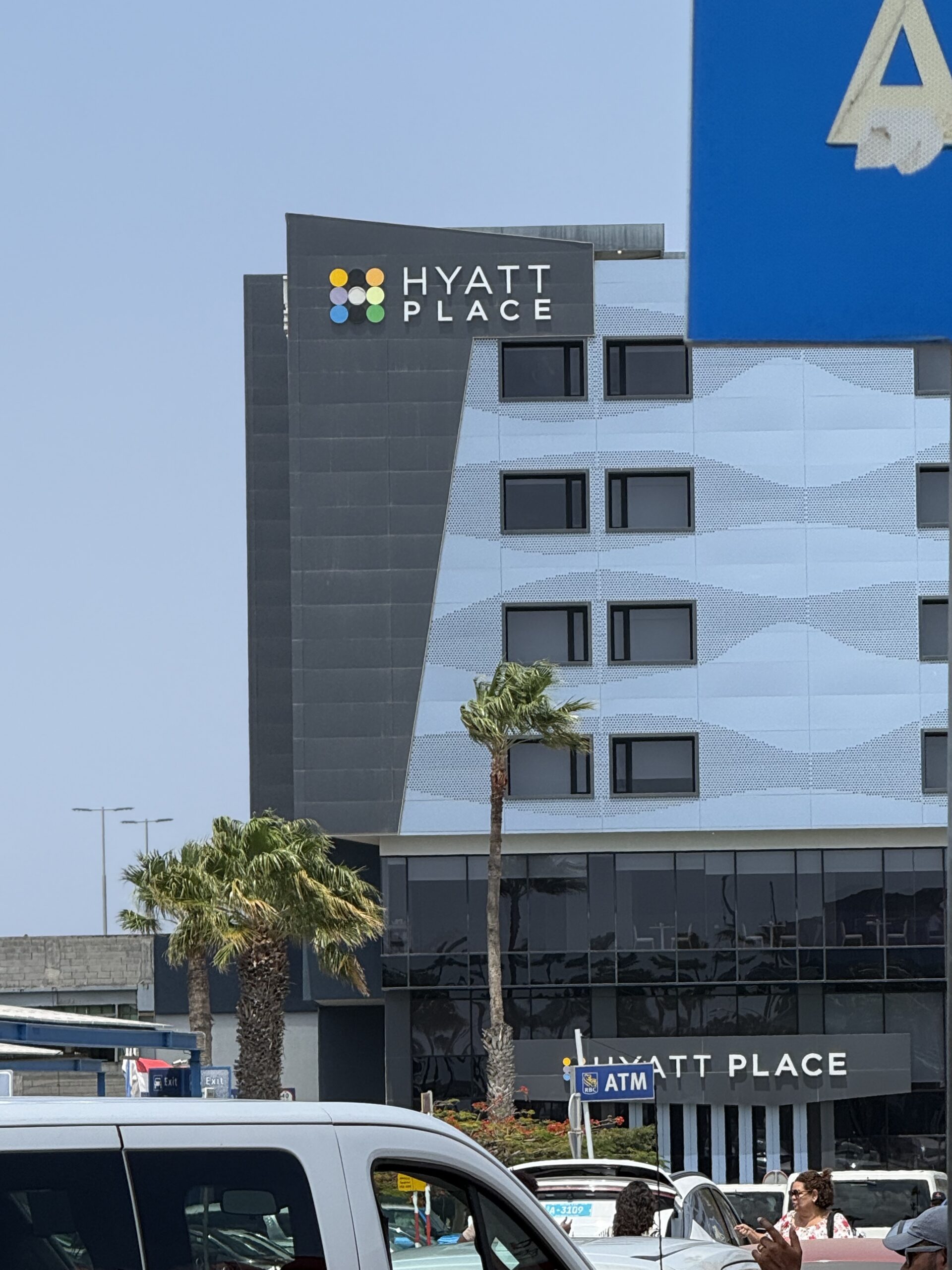
The Hyatt Place is a newer build and it shows. The hotel is close to some of Aruba’s best attractions, and Surfside Beach and Mangel Halto Beach are a quick drive, with Arikok National Park not much further. It’s not a beach resort — you’re a five-minute drive to the water, not steps from it — but that’s the whole point of using this as a launch pad.
The Room
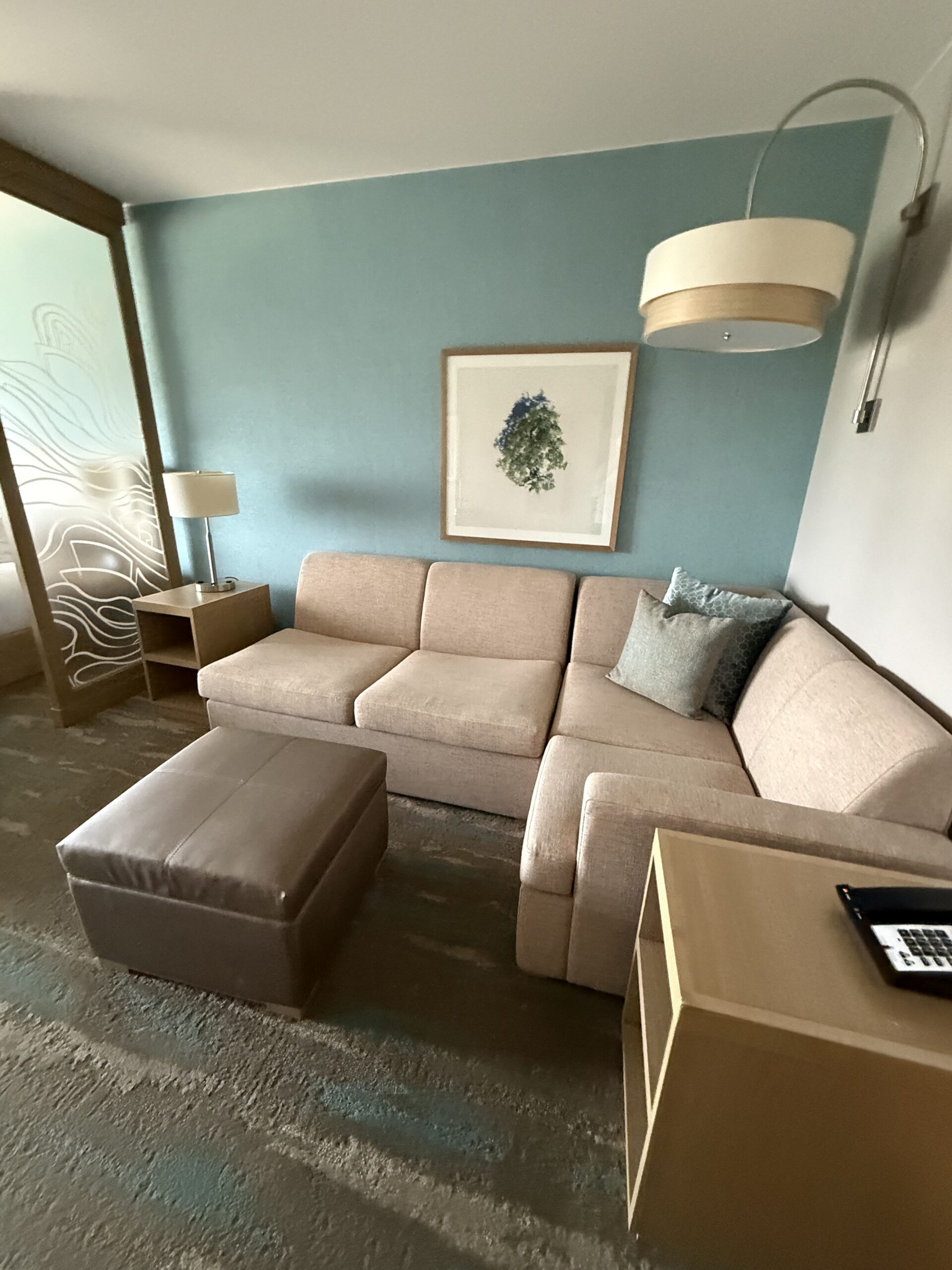
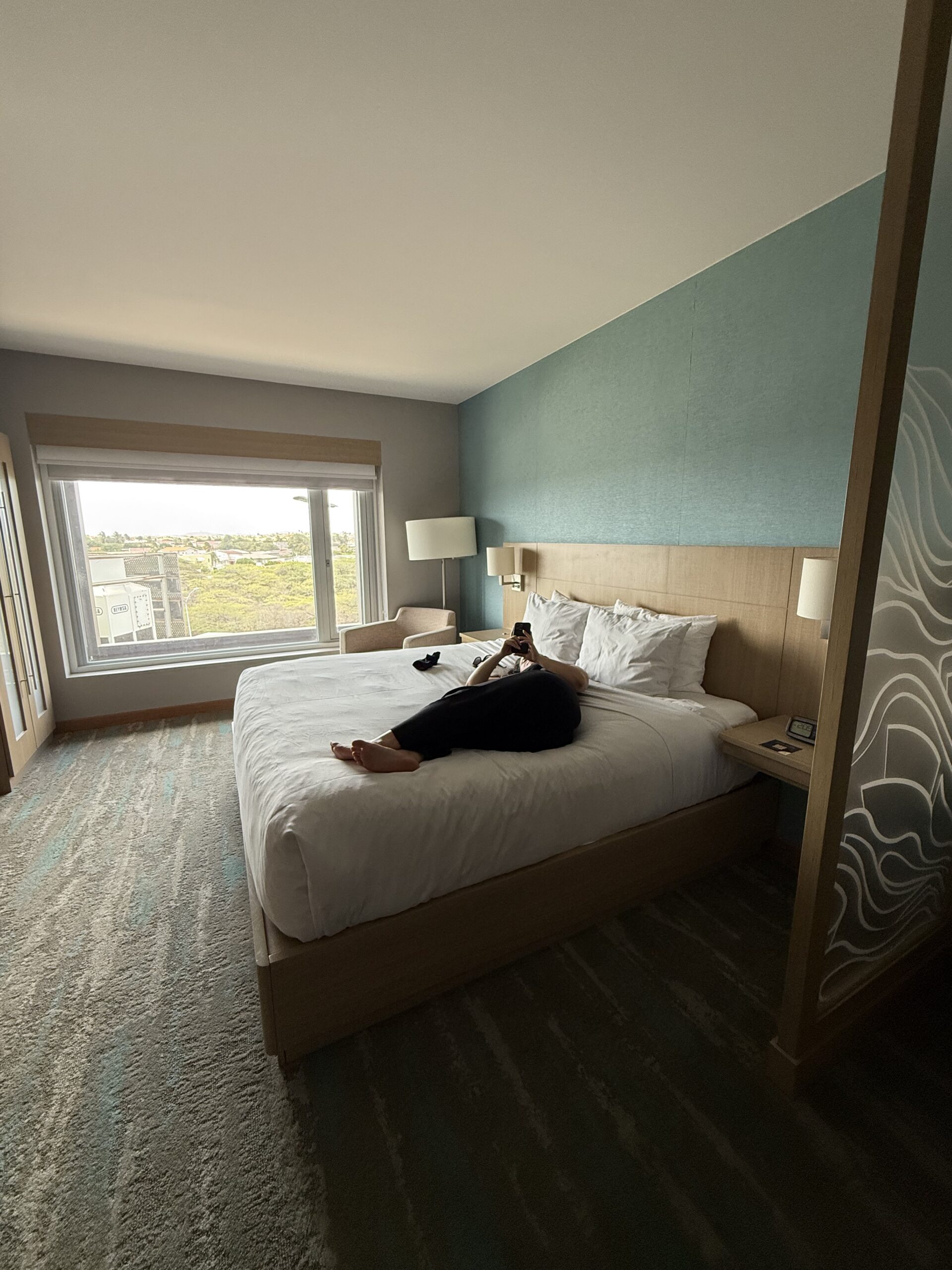
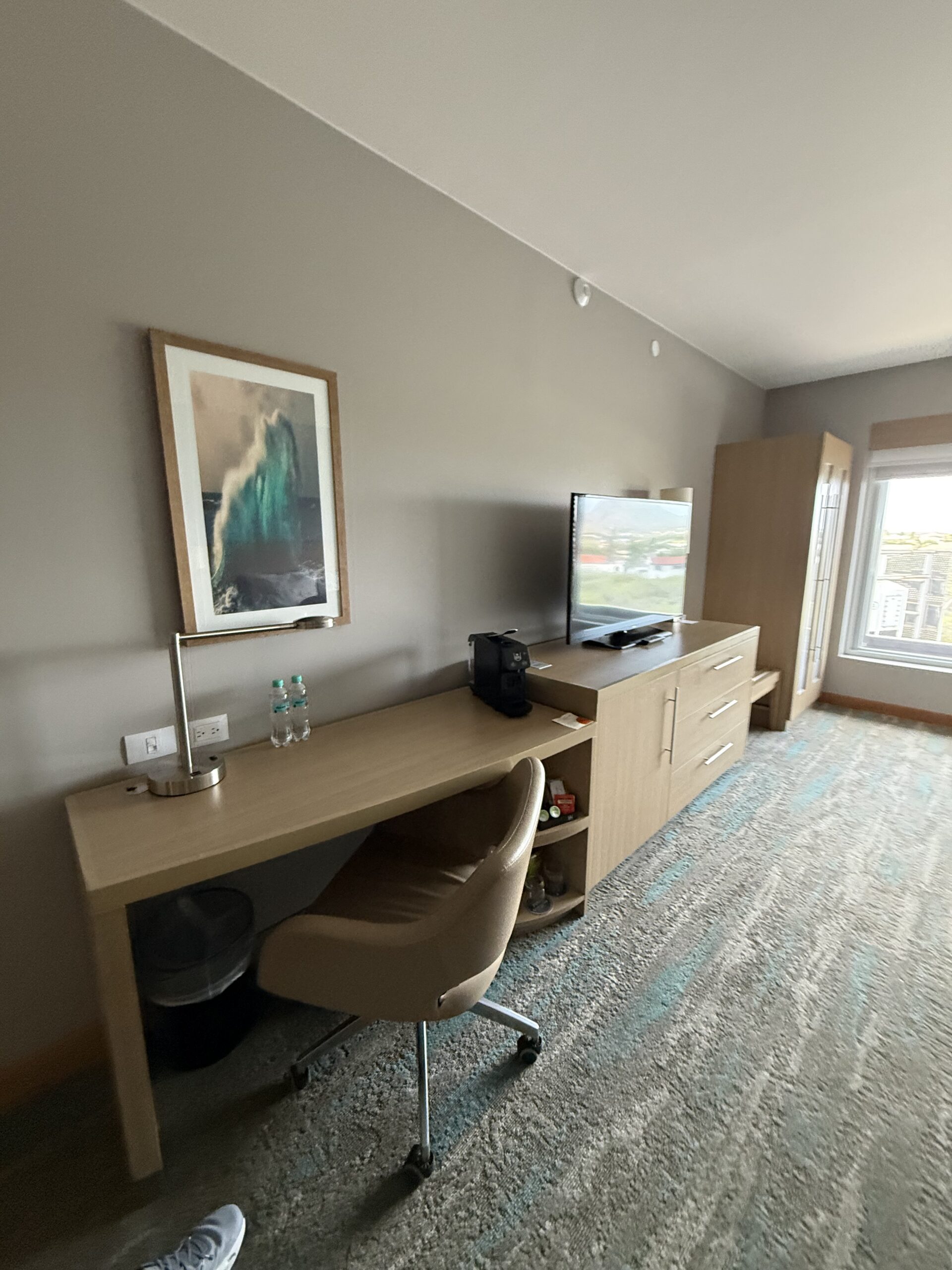
We got a corner suite on an upper floor with a king bed, a separate living area with a sectional, and honestly more space than we needed for a couple. The Nespresso machine at the desk, two complimentary bottles of water, and a proper work chair made it feel a step above a standard Hyatt Place. Views were of the surrounding scrubland and rooftops — not a beach view, but I wasn’t paying beach-view prices either.
Breakfast and Perks
The complimentary breakfast is genuinely good — the Breakfast Bar has fresh fruit, yogurt, and granola, plus eggs, hash browns, waffles, and breakfast tacos you can build yourself. Not a resort spread, but for a free morning meal that fuels a day of beach-hopping, I’ll take it every day of the week. The other unsung perk: the Stay & Park offer, which includes parking for the duration of your stay — no daily fee, no hassle. When you’re paying $50+ a day for a rental car, having free indoor covered parking matters.
Who This Hotel Is For
Hyatt Place Aruba Airport is a stopover or launch pad, not a destination. If you want to sip a piña colada with your toes in the sand from your room, this is not the property for you. But if you have a rental car, want to explore beaches all over the island, and are okay driving 5–10 minutes to reach the water, this is the smartest points play in Aruba by a wide margin. Cash rates during our dates were around $220/night, so redemptions clear the 2 cents-per-point bar easily. If you’re comparing paid options for a night or two, it’s worth running a quick check on current Aruba hotel deals before you burn points if the cash rate happens to be soft.
Nights 4–6: Hyatt Regency Aruba Resort Spa and Casino
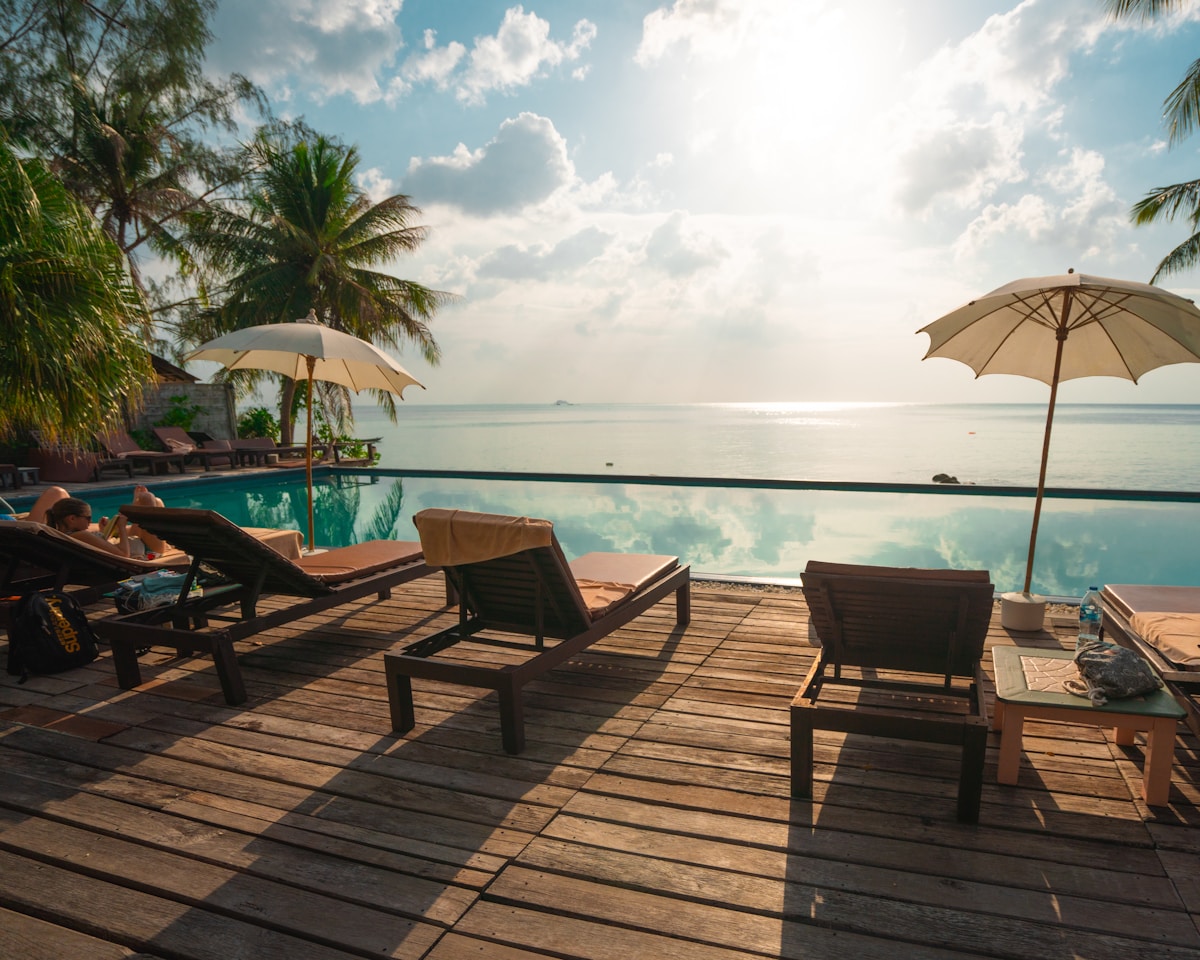
The Hyatt Regency Aruba Resort Spa & Casino is a 12-acre luxury beachfront retreat in the heart of Palm Beach with soft white sands, turquoise Caribbean waters, and easy access to shopping and nightlife. This is the classic Palm Beach experience, and after three days of DIY beach expeditions, honestly it felt earned. Waking up, walking down to the beach, and having someone bring me a Balashi — that’s a real vacation move.
The Property
The property is legitimately huge. There are two pool areas — a tranquil adult-only pool near the Trankilo Wing and an activity pool with a two-story water slide and swim-up bar. The lagoon with waterfalls and koi is a nice touch that separates this property from a lot of the cookie-cutter Palm Beach towers. And yes, the 11,200-square-foot casino sits right off the resort lobby with 192 slots, 12 tables for blackjack/roulette/poker, and 15 video poker machines. It’s compact but functional — more like a cruise ship casino than something massive like Atlantis or Baha Mar.
The Chair Reservation Situation
This is the one thing you have to know before you go: chair reservations are a real thing here, and if you don’t play the game, you lose. Beach and pool chairs can be booked up to 90 days out — and you lose them if you don’t appear by 9 a.m. the morning of your reservation. Our workaround was showing up at 9:05 a.m. every morning to claim the drops, which worked fine, but I would have been miserable if I’d shown up at 10 with no plan. Prebook your chairs when you book your stay, not the day of.

Still need to get there
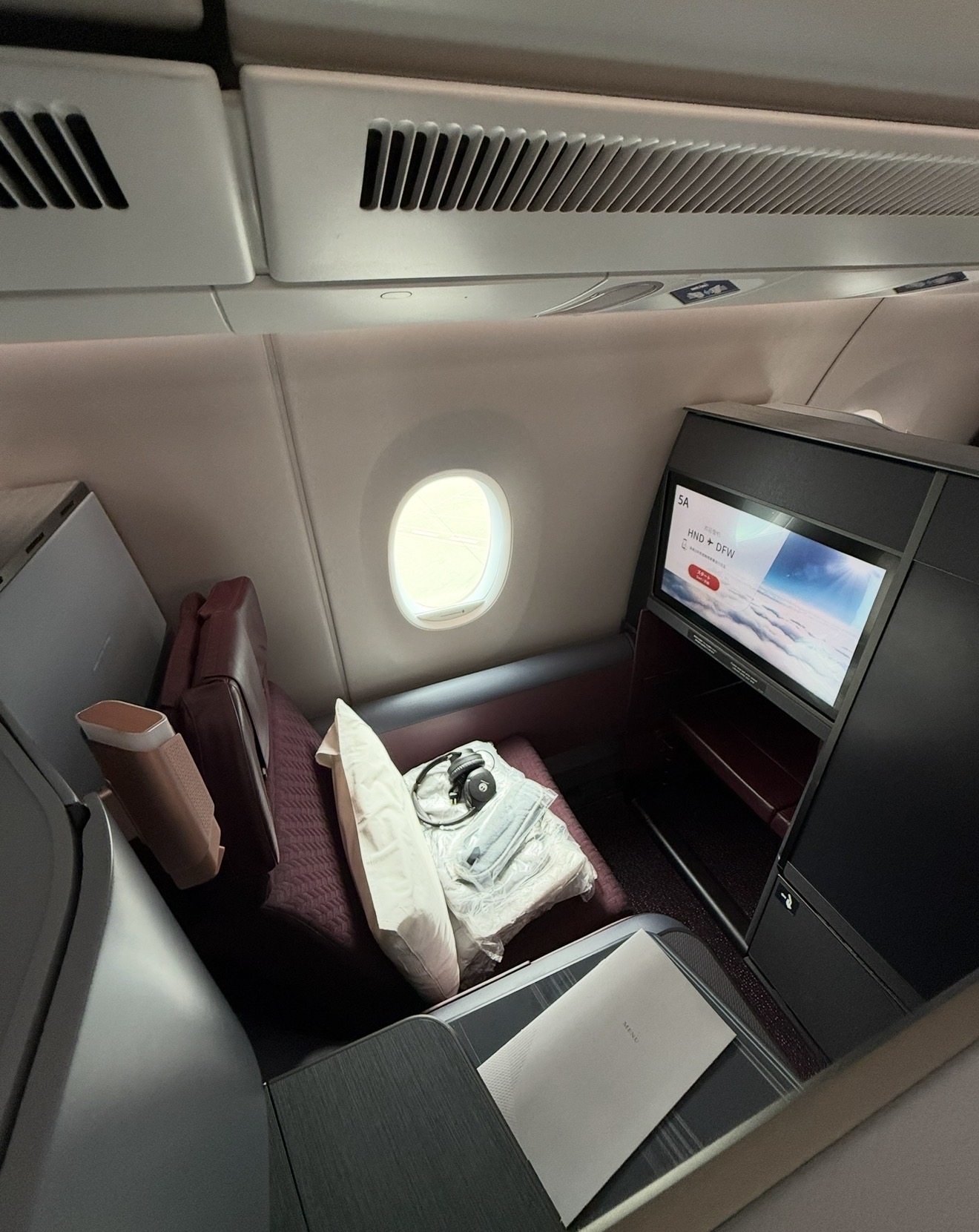
This guide is about the hotel, but the flights decide whether the trip happens. Award seats are far scarcer than award nights.


 +80
+80Free to search · partner link
Points Value at Category 8
Now for the honest math. The property moved from Category 7 to Category 8 — Hyatt’s highest standard award tier — on May 20, 2026, which means redeeming points here got noticeably less appealing during peak Caribbean travel periods. Our three nights ran roughly 90,000 points combined, against a paid rate that was hovering around $600/night with resort fees and taxes. That still clears 2 cents per point, but it’s not the same slam dunk it was two years ago. If you’re a Chase Sapphire Reserve cardholder, the 1:1 transfer to Hyatt still stands, and you can read our full Chase Sapphire Reserve 2026 review to see if that math works for you.
Renting a Car in Aruba: Yes, Do It — Roundabouts Are the One Wrinkle
We rented a small Hyundai from an airport-based agency for the whole trip. The math is simple: taxis in Aruba are government-regulated and priced by zone, and a round-trip taxi to Baby Beach alone runs $80+. A rental car for the entire six days was under $350 all-in. If you plan to leave the resort more than once or twice, rent the car.
Driving is easy in the sense that everything is on the right-hand side and speed limits are posted (in kilometers). There are no traffic lights on the island, so you’ll see a lot of roundabouts, which is the actual thing you need to prepare for. The rule is straightforward but catches Americans off guard every time: on roundabouts, traffic approaching must yield to traffic already on the roundabout — in other words, traffic on the roundabout has the right of way and drivers entering the circle must wait for an opening. Don’t hesitate, don’t stop in the middle, signal right when you’re about to exit, and you’ll be fine.
Two other things nobody warns you about. First, many car rentals are not allowed to drive on the dirt roads to inaccessible areas like behind the California Lighthouse or the road to the Natural Pool, and insurance companies will not cover damage to the vehicle — if you want to hit those areas, you need a proper 4×4 booked in advance. Second, gas stations often have attendants who pump for you, and self-service stations require you to pay inside before you can pump. Learned that the hard way on day two.
Getting there is usually the harder half of a trip like this — hotel award space is plentiful, flight award space is not. Search flights on Seats.aero to see which dates are bookable before planning around them.
The Beach Itinerary: What We Hit and What We’d Rank First
California Lighthouse (Morning of Day 1)
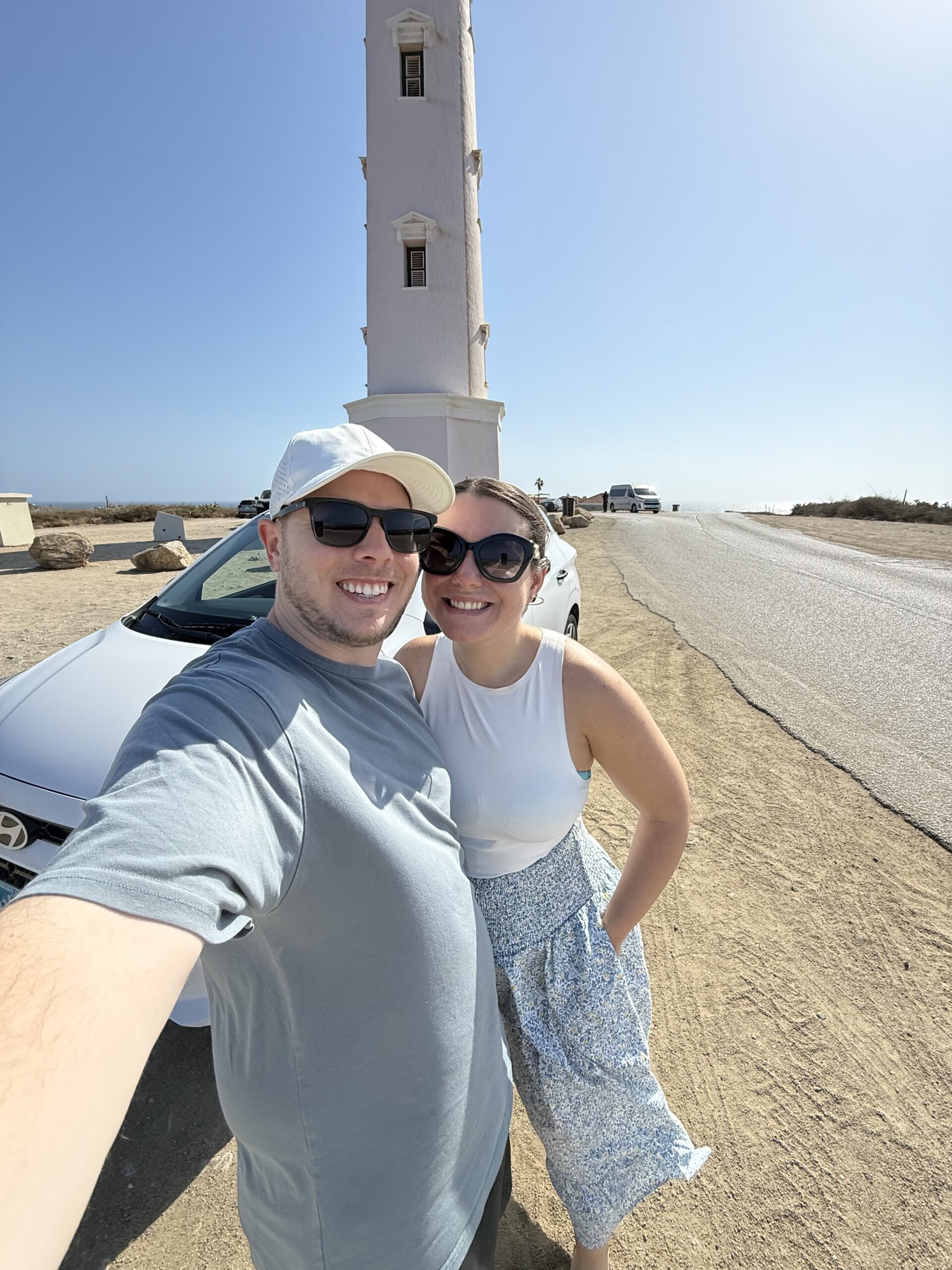
We started here on our first full morning because it’s the northwest tip of the island and the drive from Palm Beach is straightforward. You can’t go inside without a paid tour, but the view from the base is enough — cactus, sand dunes, and that classic white lighthouse against the sky. It’s a 15-minute stop, not a half-day activity, but it’s the iconic Aruba postcard shot. Faro Blanco restaurant next door is where you’d stay for lunch if you wanted to make it more of an outing.
Tres Trapi (After the Lighthouse)
Tres Trapi means “three steps” in Papiamento, and that’s literally the entrance — a small rocky cove on the northwest coast with steps carved into the rock that provide access to the water. This is where you go to swim with sea turtles. Snorkelers can spot tropical fish, sea stars, and sea turtles grazing on seagrass just beyond the buoys, and arriving between 6 AM and 11 AM increases your chances of spotting turtles and securing a parking spot. We got there around 9:30 a.m. and saw three green turtles within 20 minutes. Wear water shoes — the entry rocks are sharp and slippery.
Baby Beach (Day 2, All Day)
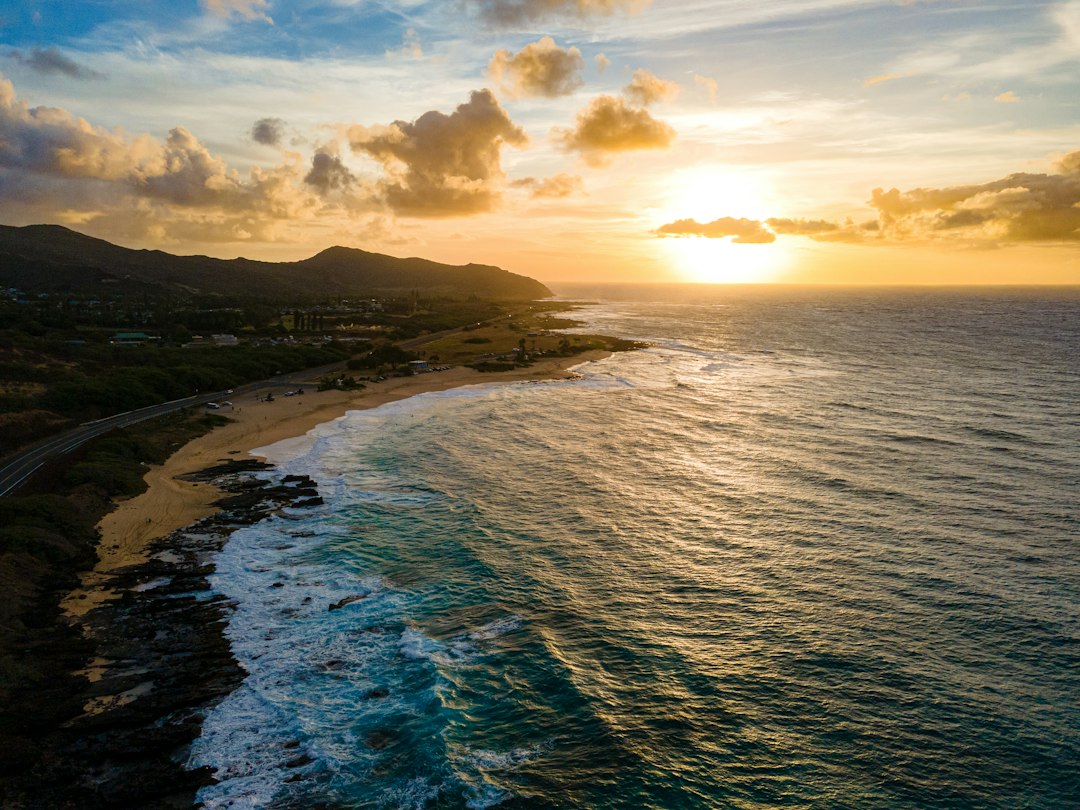
Baby Beach is the reason we based ourselves near the airport for the first half of the trip. It’s on the far southeast end of the island, a 45-minute drive from Palm Beach but only 20 from Hyatt Place. It’s a small bay resembling a lagoon that was artificially modified to be safe for swimming, and it’s an excellent place to relax and enjoy the sun and shallow water — if you want to snorkel you can head out to deeper waters to see a variety of colorful species. The water is bathtub-warm and knee-to-chest deep for a long way out.
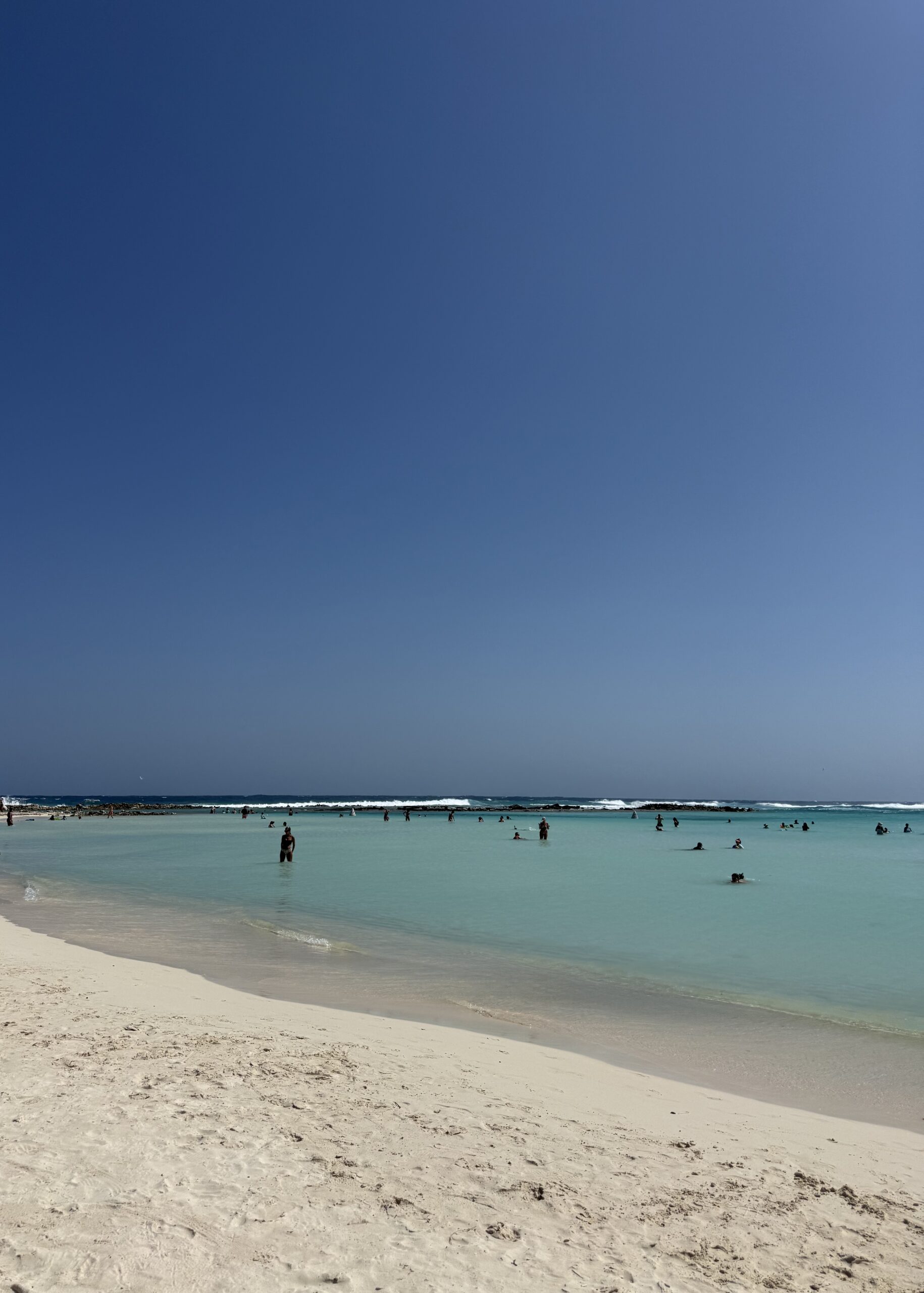
Chair rentals were $30 with an $80 palapa upgrade — bring your own if you can. Big Mama’s Grill across the street is the move for lunch. Full day here, hands down our favorite beach of the trip.
Mangel Halto (Day 3, Half Day)
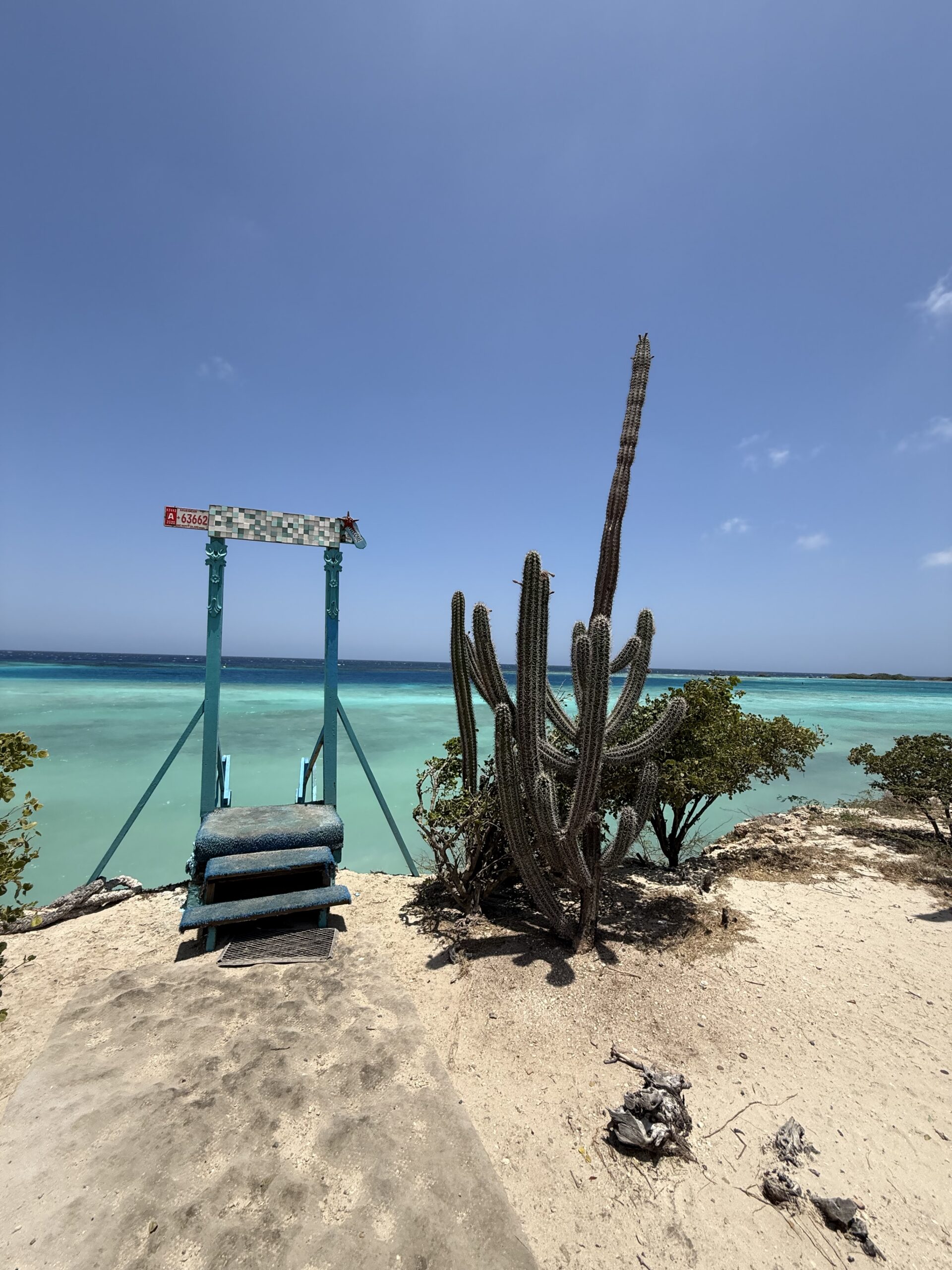
Mangel Halto is a very different vibe than Baby Beach — it’s south of Oranjestad with calm and shallow waters that make it an ideal place for snorkeling, where you’ll see many species of fish, plus a thicket of mangroves near the beach. The reef here is genuinely impressive if you’re a confident snorkeler. At Mangel Halto, you might encounter barracuda, coral reefs, groupers, lionfish, moray eels, parrotfish, trumpetfish, and yellowtail snappers. Currents can pick up past the mangroves, so stay in the sheltered lagoon area if you’re not a strong swimmer.
Manchebo Beach and Palm Beach (Days 4–6)
Once we moved to the Hyatt Regency, Palm Beach was quite literally our front yard. It’s the calm, wide, catamaran-launching kind of beach where you can walk from resort to resort along the sand. Manchebo Beach is a 10-minute drive south — technically part of Eagle Beach — and it’s a completely different vibe. Manchebo sits in the low-rise area, which means fewer towers and more open sand, and Eagle Beach is wider, quieter, and less dense than Palm Beach with gentle waves and a wide, walkable shoreline. We spent one morning at Manchebo just for the change of scenery, and it’s the kind of beach where you can walk for a mile and count the umbrellas on one hand. Worth the short drive. If you’re not tied to points and want to compare the low-rise resorts along here, it’s worth looking at what’s currently priced on the Eagle Beach strip — Manchebo and Bucuti go on sale more often than you’d think.
Hyatt Place vs Hyatt Regency: Head-to-Head
| Category | Hyatt Place Aruba Airport | Hyatt Regency Aruba |
|---|---|---|
| Hyatt Category | Category 2 | Category 8 (as of May 2026) |
| Points per Night | ~6,500–12,000 | ~25,000–45,000 |
| Cash Rate (our dates) | ~$220 | ~$600 with resort fees |
| Location | Oranjestad, near airport | Palm Beach, oceanfront |
| Beach Access | 5-min drive minimum | Steps from your room |
| Breakfast Included | Yes, full hot breakfast | Not included on award stays |
| Parking | Free covered indoor | Free self-park across the street |
| Best For | Explorers with a rental car | Beach days and pool time |
How We Earned the Hyatt Points
Roughly 115,000 Hyatt points funded this entire six-night trip. The bulk came from Chase Ultimate Rewards transfers — we transferred 100,000 Chase points at 1:1 (I have a Chase Sapphire Reserve, which is critical because beginning June 15 for new cardholders and October 1 for existing cardholders, Sapphire Preferred transfers to Hyatt dropped from 1:1 to 4:3, while the Chase Sapphire Reserve and Sapphire Reserve for Business continue to offer 1:1 transfers). If you’re serious about Hyatt redemptions and you hold the Sapphire Preferred, that transfer-ratio math matters.
The remaining 15,000 came from a World of Hyatt Credit Card welcome bonus and monthly spend. The card gives you 4 bonus points per $1 at Hyatt hotels plus up to 5 base points per $1 as a World of Hyatt member, plus a free night certificate at any Category 1-4 property every cardmember anniversary. On a trip like ours, staying at the Hyatt Regency for three paid points-eligible nights, we earned around 12,000 points just from the stay itself. That covered our next Category 2 award. For the current transfer landscape and which programs are running bonuses this month, our monthly transfer bonus roundup is worth bookmarking. If you missed the Aeroplan-Hyatt news, the new Aeroplan-Hyatt partnership opened another route to funding these stays.
 elevatemiles
Newsletter
Travel using fewer points with advanced strategies
I send what is actually worth acting on, every Thursday: new transfer bonuses, award space worth booking, and the mistakes that quietly cost people their points.
Free forever · unsubscribe in one click
Which Card Is Right for You?
- Get the World of Hyatt Credit Card if you plan to redeem points at the Hyatt Regency once a year — the anniversary free night alone at a Category 1-4 property is worth more than the $95 annual fee
- Get the Chase Sapphire Reserve if you transfer 60,000+ points a year to Hyatt and want to preserve the 1:1 ratio — the Preferred’s new 4:3 ratio costs you 25% on every transfer
- Get the Chase Sapphire Preferred if you rarely transfer to Hyatt and mostly want a low-fee travel card — the 4:3 ratio hit doesn’t matter much if you use points for flights instead
- Skip Hyatt cards entirely if you don’t stay at Hyatt properties at all — Marriott or Hilton might match your travel patterns better
What I’d Do Differently Next Time
Two things. First, I’d flip the order — start at the Regency and end at Hyatt Place. Ending a Caribbean trip at a select-service airport hotel felt anticlimactic, and starting there while you’re jet-lagged felt fine but not great. Reverse it, and the whole trip crescendos to Palm Beach. Second, I’d prebook chairs at the Regency 90 days out instead of scrambling every morning at 9:05. The system rewards planners.
If you’re planning your own trip and want a starting point for comparing paid rates alongside points redemptions, it’s worth running the dates on a couple of the Palm Beach properties before you commit — sometimes off-peak cash rates in September and October come in cheaper than the points math, especially now that the Regency is at Category 8. And if you’re a mobile-first traveler, the app-only rates on some of the smaller properties can be another 10–15% lower than what shows on desktop.
Frequently Asked Questions
Is Hyatt Place Aruba Airport really worth the trade-off vs staying on Palm Beach the whole time?
For the right traveler, absolutely. If you have a rental car and plan to explore Baby Beach, Mangel Halto, or Arikok National Park, the location cuts 45+ minutes off each of those drives compared to Palm Beach. If your idea of vacation is not leaving the resort, skip Hyatt Place and go straight to the Regency.
Do I really need a rental car in Aruba?
If you’re staying at a Palm Beach resort and planning to see one or two beaches beyond your hotel, a car isn’t essential. If you want to see the south side (Baby Beach, Mangel Halto), the north tip (California Lighthouse, Tres Trapi), or Arikok, a rental car pays for itself in one round-trip taxi savings. Roundabouts are the one adjustment, but they’re intuitive after your first drive.
How many Hyatt points do I need for a 6-night Aruba trip after the Category 8 change?
Straight at the Hyatt Regency, budget 150,000–270,000 points depending on season now that it’s Category 8. Split with 3 nights at Hyatt Place Aruba Airport and 3 at the Regency, you’re looking at roughly 100,000–130,000 total. That’s a five-figure point savings for splitting the stay.
Is Baby Beach or Mangel Halto better for snorkeling?
Baby Beach is better for casual swimmers and beginners — calm, shallow, easy to wade in. Mangel Halto has better reef and more marine life diversity, but the current can pick up past the mangroves and it’s better suited to confident snorkelers. We’d say Baby Beach for a full day, Mangel Halto for a half day with your gear.
Can I visit Tres Trapi without a tour?
Yes — the entrance is right off L.G. Smith Boulevard on the northwest coast with free parking, no admission fee, and no rentals on site. Bring your own snorkel gear, water shoes, and water. Arrive before 10 a.m. for the best chance of seeing turtles and finding parking.
Should I transfer Chase points to Hyatt for this trip or use a different program?
Chase to Hyatt is still one of the best transfer partnerships if you have the Chase Sapphire Reserve (1:1) or a Bilt card. If you only have the Sapphire Preferred or Ink Business Preferred, the new 4:3 ratio means you’re getting 25% fewer Hyatt points per Chase point transferred, and other Chase transfer partners might be a better use of points for other legs of your trip.
Are chair reservations actually necessary at the Hyatt Regency Aruba?
Yes if you want a guaranteed front-row spot. You can book chairs up to 90 days out, and unclaimed reservations get released at 9 a.m. daily. Showing up around 9:05 to grab drops works if you’re flexible, but during peak season the resort fills up fast and prebooking is the safer bet.
Bottom Line
Splitting six nights in Aruba between Hyatt Place Aruba Airport and the Hyatt Regency was the best decision we made on this trip. We spent roughly half the points a straight Regency stay would have cost, saw double the island, and finished the week on Palm Beach with the resort experience intact. If you’re planning an Aruba redemption in 2026 or beyond — especially now that the Regency is Category 8 — this is the play. Rent the car, prebook the chairs, hit Baby Beach on your first full day while you still have energy for a long drive, and don’t forget to try a Balashi at least once with your feet in the sand.