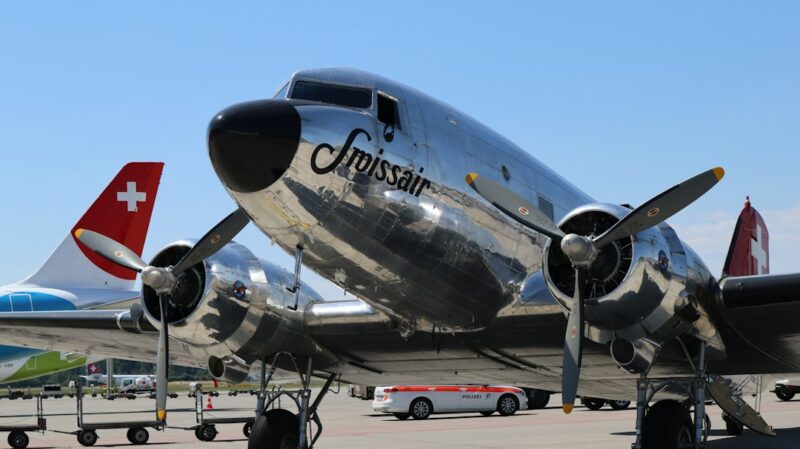
One-way SWISS business class from New York to Zurich priced at 63,530 Avianca LifeMiles in Thrifty Traveler’s April 24, 2026 searches. United MileagePlus wants 88,000 miles for that identical seat, or 80,000 if you carry a United co-branded card. Same airline, same cabin, same metal, roughly 24,500 fewer miles through the Colombian program. That gap is the entire reason to hold LifeMiles, and it only exists on specific carriers.
Elevate Miles Verdict
Hold LifeMiles for one job: transatlantic business class on SWISS, Austrian, Brussels, LOT or Lufthansa metal, booked one-way, with no fuel surcharges attached. On those carriers it undercuts United by 15,000 to 25,000 miles per seat. Do not use it for United-operated flights, where LifeMiles charges 92,400 miles against United’s own 88,000. And never park a speculative balance there, because the program has devalued three times since late 2024 with zero notice.
LifeMiles is the frequent flyer program of Avianca, Colombia’s flag carrier, and it has been a Star Alliance member long enough that you can redeem its miles on Lufthansa, SWISS, Austrian, Brussels Airlines, LOT, ANA, EVA, Turkish, Singapore and United without ever setting foot in Bogotá. Two structural features make it worth the hassle: it prices partner awards in fixed regional bands rather than dynamically, and it passes along zero carrier-imposed fuel surcharges. Below is exactly where that edge still holds in late 2026, where it has evaporated, and how to get the miles into your account without stranding them.

The Price Gap, in Actual Numbers
United has not published an award chart for years. Its partner pricing settled into a pattern anyway, and Thrifty Traveler documented it on November 10, 2025: after years of charging a flat 88,000 miles each way for transatlantic business class on a partner airline like Lufthansa or Austrian, United briefly cut that to 80,000 for everyone, then reversed the cut and reserved the lower price for cardholders only. A Chicago to Zurich business class award on SWISS went back to 88,000 miles each way, with “Cardmembers pay” pricing of 80,000. Denver to Munich on Lufthansa did the same. AwardWallet’s MileagePlus guide shows the identical structure on Los Angeles to Zurich, at 44,000 miles in economy and 88,000 in business, with the lower numbers gated behind a United card.
LifeMiles, meanwhile, prices by region and operating carrier, and the spread between those regions is enormous. Here is what the two programs charged for comparable one-way transatlantic business class seats, using dated search results rather than remembered sweet spots.
| One-way business class | Avianca LifeMiles | United MileagePlus | Who wins |
|---|---|---|---|
| JFK–ZRH, SWISS | 63,530 (TT, Apr 2026) | 88,000 / 80,000 cardmember | LifeMiles by ~24,500 |
| JFK–WAW, LOT Polish | 69,000 (TT, Apr 2026) | 88,000 / 80,000 cardmember | LifeMiles by ~19,000 |
| IAD–VIE, Austrian | 80,810 (TT, Apr 2026) | 88,000 / 80,000 cardmember | LifeMiles, barely |
| EWR–LIS, TAP Air Portugal | 92,400 (TT, Apr 2026) | 88,000 / 80,000 cardmember | United |
| IAD–BRU, United metal | 92,400 (TT, Apr 2026) | 88,000 / 80,000 cardmember | United |
| Transatlantic economy, partner | 48,400 (TT, Apr 2026) | 44,000 / 40,000 cardmember | United |
Read that table twice, because it contradicts the version of LifeMiles most people carry in their heads. The program is not uniformly cheap. It is cheap on a handful of specific city pairs and expensive on others, and the difference between 63,530 and 92,400 miles for two flights departing the same airport on the same afternoon is pure zone-mapping arbitrage. Upgraded Points, in its November 2026 guide to U.S. Bank’s new transfer partners, puts the full working range at 54,000 to 92,000 miles one-way for U.S. to Europe business class depending on route, carrier, date and whether you connect. Nobody should assume those prices hold.
 elevatemiles

Newsletter
Travel using fewer points with advanced strategies
I send what is actually worth acting on: new transfer bonuses, award space worth booking, and the mistakes that quietly cost people their points.
Free forever · unsubscribe in one click
Why LifeMiles Prices Partner Awards Lower Than United Does
Three mechanics drive the gap, and understanding them tells you when to expect it and when not to.
Fixed regional bands instead of revenue-linked pricing
Avianca prices its own flights dynamically against the cash fare, but partner awards run on unpublished region-to-region charts. Prince of Travel’s program guide notes LifeMiles splits the world into roughly 20 regions, with the contiguous United States alone carved into three zones. That is why a West Coast departure and an East Coast departure to the same European city can price differently, and why a connection sometimes prices lower than the nonstop. Thrifty Traveler found a San Francisco to Warsaw nonstop at 92,400 miles while the same journey routed through Frankfurt with an economy connection came to 91,490.
No carrier-imposed surcharges, ever
This is the one LifeMiles advantage that has survived every devaluation. Lufthansa Group carriers are brutal on surcharges when you book through their own program: The Miles Market’s March 2026 analysis found a transatlantic business award booked directly through Miles & More carried roughly €1,148 in surcharges, about $1,260. Through LifeMiles you pay government taxes plus a flat $25 partner booking fee per passenger, and that is it. United does not pass partner surcharges either, so this is not an advantage over MileagePlus specifically — it is an advantage over Miles & More, ANA, Singapore and most European programs.
Mixed-cabin awards price by segment
LifeMiles will sell you business class on the long leg and economy on the connection, and price the ticket accordingly. The savings are usually small, but on a route where the nonstop prices into an expensive band it can be the difference between booking and walking away. Frequent Miler’s team has repeatedly flagged that the same search run two ways — the default “Smart Search” versus filtering by “Star Alliance” — returns different prices on the same dates. Thrifty Traveler reproduced it back-to-back in the same browser on an Asiana award, getting 48,400 miles one way and 64,900 the other.
Where LifeMiles Loses
If you take one thing from this guide, make it this: LifeMiles is the wrong currency for United-operated flights. Thrifty Traveler’s April 2026 reporting found that after Avianca had already raised United-metal Europe redemptions to 40,000 economy and 80,000 business, it hiked them a further 15% to 21%, landing at 48,400 and 92,400. A United Polaris flight from Washington Dulles to Brussels that cost 80,000 LifeMiles now costs 92,400 — more than United charges in its own program for the same seat. Longer United routes moved too, with Newark to Cape Town going from 55,000 to 66,550 miles in economy, and Chicago to Tokyo landing at the same 66,550.
The second loss is Air Canada Aeroplan, which is the real competitor here and the one most guides skip. Aeroplan prices by distance band, and Upgraded Points’ SWISS booking guide points out that every nonstop from Boston and the New York area to Zurich or Geneva falls just inside the 4,000-mile band, making them bookable at 60,000 Aeroplan points one-way. That beats LifeMiles’ 63,530 on the single best LifeMiles transatlantic route, and Aeroplan will add a stopover for 5,000 points, which LifeMiles does not offer at any price.
The geography is what decides it. Aeroplan’s distance pricing climbs as you move west — Los Angeles and San Francisco to Zurich land in the 4,001-to-6,000-mile band at 70,000 points — while LifeMiles’ zone pricing does not climb the same way. Frequent Miler’s Nick Reyes, who has written that he has used LifeMiles more than any other airline currency over the past decade, puts it plainly: the program’s advantages over Aeroplan expand for readers based further west in the United States. If I were pricing a Europe trip out of Seattle or San Francisco today, LifeMiles would be the first search. Out of Boston, it would be the second.
That comparison is also the reason I would not transfer anything until I had checked more than one program against the same calendar. Searching the major programs at once is the only efficient way to see whether Aeroplan, LifeMiles or United is cheapest for your specific dates, and over a year of trip planning that comparison pays for itself many times over.
Which Credit Card Points Transfer to LifeMiles
LifeMiles is one of the most widely reachable airline currencies in the U.S. market, with one glaring omission. As of November 2026, these programs move points in at 1:1: American Express Membership Rewards, Capital One Miles, Citi ThankYou Points, Bilt Rewards, Wells Fargo Rewards and Brex. Marriott Bonvoy transfers at 3:1, and Prince of Travel notes Marriott’s usual 5,000-mile bonus per 60,000 points transferred does not apply to LifeMiles, so 60,000 Bonvoy nets a flat 20,000 miles. U.S. Bank joined the list on August 29, 2026, adding Avianca as its fifth Altitude Reserve transfer partner at 1:1.
Chase Ultimate Rewards is not on that list. Chase added Cathay Pacific and Qantas to its lineup in late 2026 and Wyndham back in February, but Avianca has never been a Chase partner. If your points live at Chase, your Star Alliance routes are Aeroplan and United MileagePlus, both at 1:1 — which, given that United is Chase’s co-brand issuer, is not a coincidence. This is the single clearest argument for keeping a Membership Rewards or Citi ThankYou balance alongside your Chase points. The Amex Platinum, the Amex Gold, the Citi Strata Premier and the Capital One Venture X all feed LifeMiles directly.
The live transfer bonus, and what it is worth
Amex is running a 10% bonus to Avianca LifeMiles from November 16 through December 16, 2026, turning 1,000 Membership Rewards points into 1,100 LifeMiles, on eligible transfers from 1,000 up to 750,000 points. That is a weak offer by historical standards. Frequent Miler notes Amex typically runs 15% to LifeMiles and did so twice earlier in 2026, and Citi ran a 25% bonus in September 2026. Capital One ran 15% in August. AwardHack’s tracker, which has logged nearly 500 transfer bonuses since 2017, lists Avianca LifeMiles among the three programs that receive bonuses most often, alongside Virgin Atlantic and Flying Blue.
Translating that into a booking: at the 69,000-mile rate that still covers many Europe routes, the 10% bonus means transferring about 62,700 Membership Rewards points instead of 69,000. Add a LifeMiles+ Lite subscription, which carries a 10% discount on Star Alliance partner awards, and Frequent Miler calculates the same award drops to 62,100 miles, or roughly 57,000 Amex points after the bonus. The arithmetic behind that stacking is worth understanding before you move anything — our walkthrough of the transfer bonus formula covers it, and the live bonus tracker is updated monthly so you are not working from a stale roundup.
Buying miles outright
Avianca sells LifeMiles directly, and during a strong promotion this is a legitimate acquisition route rather than a last resort. The most recent public sale ran through October 20, 2026, at up to a 145% bonus, which Prince of Travel priced out at 51,000 miles purchased yielding 124,950 miles for $1,683 — about 1.35 cents per mile. Upgraded Points values LifeMiles at 1.4 cents each, so that was buying slightly below estimated value.
As of mid-November 2026, no public buy-miles bonus is running, and the base rate is roughly 3.3 cents per mile, which is not worth paying. These sales recur several times a year, and Prince of Travel notes bonuses in the 155% to 165% range were the norm until spring 2026, with 160% offers as recently as March and April. Purchase caps have been reported inconsistently across outlets — 200,000 miles per transaction is the figure most sources agree on, with the annual ceiling cited anywhere from 200,000 to 500,000 base miles — so confirm the terms shown in your own account. Offers are increasingly targeted, which means your account may show a different bonus, or none at all.

Before you move a single point, confirm the seat exists. That ordering is not optional with this program, and it is where most LifeMiles bookings fall apart.

Before you book: check the award space
Search millions of award seats across airlines, and get alerts when the flights you want become available.


 +80
Free to search · alerts are paid · partner link
How to Search Star Alliance Award Space Without Getting Burned
LifeMiles has a long-documented problem: its own search engine does not reliably display all the Star Alliance saver space that other member programs can see. FlyerTalk’s LifeMiles threads are full of cases where United.com shows Lufthansa business availability and LifeMiles shows nothing on the same dates. Upgraded Points puts it directly in its program notes — the LifeMiles search engine sometimes shows space that fails at checkout, so confirm the seat through another website before you transfer any points.
The sequence that works:
- Find the space on a neutral tool first, not on lifemiles.com. United’s month-long calendar search is the most honest free view of Star Alliance partner inventory, and Gary Leff recommends using it to find dates with multiple seats regardless of which program’s miles you plan to spend
- Run the same route on an aggregator to catch what any one airline site hides. If you have a fixed route and date window, search the flights on Seats.aero before you commit to a program
- Price it in LifeMiles twice — once on the default Smart Search, once filtered to Star Alliance. The two paths return different numbers often enough that it is worth the thirty seconds
- Only then transfer, and only the exact amount you need, rounded up to the nearest thousand
- Book within minutes. Saver inventory on Lufthansa Group metal does not sit around
Timing matters as much as the tool. Lufthansa releases long-haul business class to partner programs just 85 days before departure, which is one of the most restrictive partner release policies in any alliance, so an empty search eleven months out tells you nothing. Our award release calendar has the carrier-by-carrier windows. SWISS tends to be the friendlier Lufthansa Group carrier for partner space: award seats are released 330 days out, and Gary Leff flagged summer 2026 availability with up to nine business class seats bookable on some Zurich routes out of Boston, JFK, Newark, Chicago and Dulles.
If the numbers on your route do not work for the balance you actually hold, that is worth knowing before you start transferring. Roame scans 25 programs across a full 365-day calendar at once, which answers a different question than a route search does — whether your points reach the same place for less through a program you had not considered.
The Worked Example: New York to Zurich, Priced Four Ways
Take the single most-cited LifeMiles transatlantic route: SWISS business class, JFK to Zurich, one-way, lie-flat in a 1-2-1 cabin. Here is the full cost in each currency, using dated figures.
| Program | Miles one-way | Cash due | Bank points needed |
|---|---|---|---|
| Avianca LifeMiles | 63,530 | ~$53 taxes + $25 partner fee | ~57,800 Amex at the live 10% bonus |
| Avianca LifeMiles + LifeMiles+ Lite | ~57,180 after the 10% discount | ~$53 + $25, plus the subscription | ~52,000 Amex at the live 10% bonus |
| United MileagePlus | 88,000 (80,000 with a United card) | ~$5.60 | 88,000 Chase or Bilt |
| Air Canada Aeroplan | 60,000 (sub-4,000-mile band) | ~$58 | 60,000 from Amex, Chase, Capital One, Citi or Bilt |
Now the value. 10xTravel priced a round-trip SWISS business class itinerary between Chicago and Zurich at $4,018 cash, so call the one-way fare roughly $2,000 for a like-for-like comparison. Against the LifeMiles price, that is ($2,000 − $78) ÷ 63,530 = 3.02 cents per mile. Against United’s non-cardmember price, it is ($2,000 − $5.60) ÷ 88,000 = 2.27 cents per mile. Same seat, same day, a third more value per point through the partner program.
Two honest caveats on that table. First, Aeroplan at 60,000 points is the outright winner on this specific route, and it accepts Chase points, which LifeMiles does not. Second, before you treat any award as a good deal, check what JFK departures are actually going for in cash on your dates. Transatlantic business fares swing hard by season, and a 63,530-mile redemption against a $1,100 sale fare is a mediocre use of points no matter how cheap the award looks.
Push the same logic west and LifeMiles improves. Aeroplan charges 70,000 points from Los Angeles or San Francisco to Zurich because those routes cross into the 4,001-to-6,000-mile band, while LifeMiles’ zone chart does not necessarily move. That is the structural reason the program earns its keep for West Coast flyers specifically. For a sense of how the same arithmetic plays out on a different Star Alliance carrier and a longer routing, our Cape Town award breakdown prices Ethiopian business class across three programs, and our LOT Polish 787 review covers what the Warsaw routing is actually like in the cabin.
The Fees and Fine Print That Cost People Money
LifeMiles is cheap on miles and unforgiving on everything else. Budget for all of it before you transfer.
- $25 partner booking fee per passenger. It cannot be waived, it is the same on a one-way as on a round trip, and Award Cracker reports it is nonrefundable even if you cancel within 24 hours. On a family of four booking round trips, that is $200 of fees United and Aeroplan do not charge
- Change and cancellation fees are punitive. MilesTalk documents a $150 per-person fee to change dates only, and $200 per ticket to cancel and redeposit on long-haul awards. You cannot change to a different routing or carrier at all, only to another date where LifeMiles itself shows space
- No free stopovers and no open jaws. Every segment is a direct connection or a separate booking. Aeroplan’s 5,000-point stopover has no equivalent here
- LifeMiles+ is a paid subscription with changing terms. The headline benefit for award bookers is a 10% discount on Star Alliance partner redemptions, with up to 25% off Avianca-operated flights. The change and cancellation waiver that once came with the Basic tier has been revised, so read the current tier terms rather than an older writeup before subscribing on the strength of it
- Avianca reserves the right to reprice anything, any time. This is not blogger caution, it is written into the program rules. The official LifeMiles terms and conditions state that any award may be subject to increased mileage requirements or new restrictions at any time, and that the program may modify the price in miles for award tickets and the methodology used to calculate it
Which is exactly why the discipline matters. Keep your balance in the bank, confirm the seat, transfer the precise amount, book immediately. Three no-notice devaluations since late 2024 — August 2024, February 2025 and April 2026 — have each punished people holding speculative LifeMiles balances. If a specific itinerary is complicated enough that you would rather not run that gauntlet yourself, our award booking service handles the search and the transfer end to end.
One last point on currency diversification. SWISS, Lufthansa, Austrian and Brussels all sit inside the same alliance, and United is a MileagePlus partner of SWISS, which means the same seat is simultaneously purchasable in four different currencies at four different prices. If you only hold one of them, you are accepting whatever that program charges. Checking what your balance opens up on Roame before you pick a program is the cheapest insurance against that.
Which Card Is Right for You?
- Get the Amex Platinum or Amex Gold if you want the deepest route into LifeMiles — Amex has run more bonuses to Avianca than any other issuer, and Membership Rewards also reaches Aeroplan and ANA for the same Star Alliance seats
- Get the Citi Strata Premier if you want LifeMiles plus Turkish Miles & Smiles in one currency, since Citi ran a 25% LifeMiles bonus as recently as September 2026
- Get the Capital One Venture X if you want a 1:1 pipe into LifeMiles alongside Aeroplan and Flying Blue, with the lounge access and travel credit paying for the fee separately
- Stick with Chase if you fly United itself more than you fly its partners — Ultimate Rewards does not reach LifeMiles at all, but it does reach United and Aeroplan at 1:1
- Skip the LifeMiles ecosystem entirely if your plans change often — the $150 change and $200 cancellation fees will eat the mileage savings on the first schedule shift
Frequently Asked Questions
Does Chase Ultimate Rewards transfer to Avianca LifeMiles?
No. As of November 2026, LifeMiles accepts 1:1 transfers from American Express, Capital One, Citi, Bilt, Wells Fargo, Brex and U.S. Bank Altitude Reserve, plus Marriott Bonvoy at 3:1. Chase has never been a LifeMiles partner, so Chase cardholders reach Star Alliance through United MileagePlus or Air Canada Aeroplan instead, both at 1:1.
Is LifeMiles always cheaper than United for Star Alliance business class?
No, and this is the most common mistake. On non-United partner metal like SWISS or LOT, LifeMiles can price 15,000 to 25,000 miles lower per one-way seat. On United-operated flights to Europe, LifeMiles charges 92,400 miles against United’s own 88,000, or 80,000 for United cardholders. Price both before you transfer.
How many LifeMiles do I need for business class to Europe right now?
Plan on a range rather than a single number. Upgraded Points puts U.S. to Europe business class at 54,000 to 92,000 LifeMiles one-way depending on route, carrier and date. Thrifty Traveler’s April 2026 searches found JFK to Zurich on SWISS at 63,530 and JFK to Warsaw on LOT at 69,000, with Austrian from Dulles at 80,810 and several routes at 92,400.
Is there a transfer bonus to LifeMiles right now?
Yes. American Express is running a 10% bonus on transfers to Avianca LifeMiles from November 16 through December 16, 2026, on eligible transfers between 1,000 and 750,000 points. It is a below-average offer — Amex has twice run 15% in 2026 and Citi ran 25% in September — so it is worth taking only if you already have a redemption priced out.
Should I buy LifeMiles instead of transferring points?
Only during a promotion, and only with a seat already confirmed. The base rate sits near 3.3 cents per mile, which is not worth paying. The last public sale ran through October 20, 2026, at up to a 145% bonus, working out to about 1.35 cents per mile, and no public bonus is running as of mid-November 2026. These sales recur several times a year and have reached 155% to 165% historically.
Why does the LifeMiles website show no availability when United shows seats?
LifeMiles does not always have access to the same partner inventory other Star Alliance programs see, and its booking engine sometimes displays space that fails at the final payment step. Try the same search twice, once on Smart Search and once filtered to Star Alliance, since the two paths regularly return different results. If both come up empty, the seat may genuinely not be bookable through Avianca even though United can sell it.
Is LifeMiles or Aeroplan better for transatlantic business class?
It depends on your departure city. Aeroplan’s distance bands put Boston and New York to Zurich or Geneva at 60,000 points one-way, which beats the best LifeMiles rate on that corridor and adds a stopover for 5,000 more. From Los Angeles or San Francisco, Aeroplan climbs to 70,000 while LifeMiles’ zone pricing does not necessarily follow, which is where LifeMiles earns its reputation.
Bottom Line
LifeMiles is a specialist tool, not a default currency. Used for one-way transatlantic business class on SWISS, LOT, Austrian or Brussels metal, from a western or central U.S. gateway, with the seat confirmed elsewhere before any points move, it is still the cheapest path to a lie-flat seat across the Atlantic that most American cardholders can reach. Used for United flights, for speculative balances, or by anyone whose plans might shift, it is a worse deal than either United or Aeroplan once the fees land. Keep an account open, keep it empty, and let Amex, Citi or Capital One fund it the week you book.