The stretch of the Urubamba Valley between Cusco and Machu Picchu has something like two dozen hotels worth staying in, and exactly one of them can be booked with transferable points. That is not a failure of research, it is the actual inventory: Belmond, Explora, Inkaterra, Sol y Luna, Aranwa, Casa Andina and the rest are independents or local chains, and the only flag from a program you can reach with an American credit card is Tambo del Inka, a Luxury Collection Resort. The good news is that it happens to be one of the better Marriott Bonvoy redemptions in the Americas, and the arithmetic below explains why.
Elevate Miles Verdict
Tambo del Inka in Urubamba is the only Sacred Valley hotel bookable on chain points, and a five-night award there with Marriott’s fifth-night-free benefit is the single best points play in the region — roughly 1.2 cents per Bonvoy point against real cash rates of $450 to $500 a night. If you want any other valley property, stop trying to use points and pay cash, or use Amex Platinum’s Fine Hotels + Resorts credits at Belmond Rio Sagrado. And if your balance is Hilton rather than Marriott, the right move is a points base in Cusco plus paid nights in the valley.
Below is every accommodation option in the valley with its actual loyalty status, the verified award band and cash rates at the one property that has a chart, the cheapest of the four ways to get those Bonvoy points, the buy-points math on the Cusco alternative, and the 2026 Machu Picchu ticketing rules that now dictate your hotel choice more than the hotels do.

The Inventory Problem, Stated Honestly
Most Sacred Valley coverage is written by tour operators, and it reads like it. The points angle is close to unwritten for a simple reason: there is almost nothing to write about. Here is the full picture of who actually operates in the valley.
Marriott has one property, and it is the anchor of this entire article. Hilton has none in the valley. World of Hyatt has none. IHG has none. What the valley does have is a genuinely excellent independent luxury market: Rio Sagrado, A Belmond Hotel, which sits on the Urubamba River at km 75.8 of the Urubamba–Ollantaytambo road, Explora Valle Sagrado, Inkaterra Hacienda Urubamba on roughly 100 acres at km 63, Sol y Luna and Aranwa. None of them has an award chart, and none of them is reachable from Membership Rewards, Ultimate Rewards, ThankYou Points or Capital One miles.
Two properties carry a chain flag that gets people’s hopes up and should not. Casa Andina Premium Valle Sagrado is part of a well-run Peruvian chain, and Sonesta Posadas del Inca sits in Yucay just outside Urubamba, but neither program connects to any of the major US transferable currencies. Book both on cash or not at all.
There is one real exception to the cash-only rule that most points writers skip, and it is worth naming precisely because it is not an award chart. Both Tambo del Inka and Belmond Rio Sagrado appear in American Express Fine Hotels + Resorts. That matters if you carry the Amex Platinum, because the card’s up-to-$300 semi-annual credit on prepaid FHR and Hotel Collection bookings through Amex Travel is up to $600 a year against a stay you were going to pay for anyway, on top of the FHR benefits themselves. That is a discount on a cash booking, not a free night, and I will not dress it up as anything else. On a $475 room at Rio Sagrado, a $300 credit is a 63% cut on night one, which is a better outcome than any points redemption you can construct at that property, because no such redemption exists.
 elevatemiles
Newsletter
Travel using fewer points with advanced strategies
I send what is actually worth acting on — transfer bonuses the day they open, award space worth booking, and the mistakes that quietly cost people their points.
Free forever · unsubscribe in one click
Tambo del Inka: The Only Award Chart in the Valley
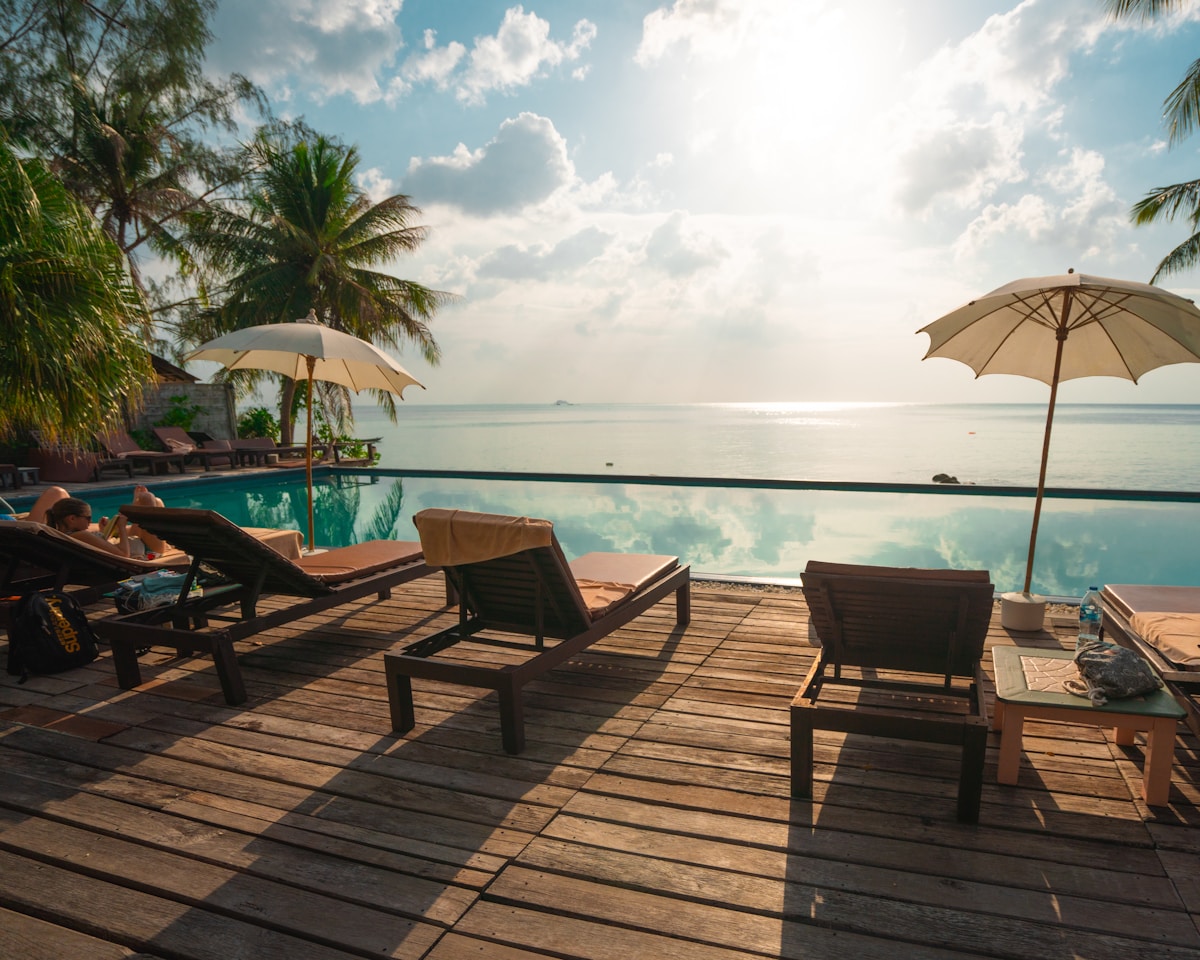
Tambo del Inka opened in 2010 with 128 rooms and suites on the banks of the Vilcanota River at Avenida Ferrocarril in Urubamba, walking distance from the town plaza and roughly an hour from Cusco’s airport by road. It is a Luxury Collection property, which means breakfast and suite upgrades are on the table for Platinum and above, and trip reports going back years are consistent about the staff and the Kallpa spa’s hydrotherapy circuit. The structural feature nobody else in the valley can match: it is the only hotel in Peru with its own train station for Machu Picchu service.
What a Night Actually Costs
Marriott discontinued its published award chart in March 2022, so there is no category to look up and any single number quoted for this hotel is wrong on most dates. Here is every data point I could verify, with its basis:
- FlyerTalk members report a 40,000 to 50,000-point band, and note this is one of the rare properties where the award price went down at a Marriott repricing
- A documented three-night stay priced at 48,000 to 49,000 points per night
- A dated August 2026 trip report puts the starting award rate at around 56,000 points per night
- A 2026 comparison of Marriott’s eight luxury properties in Peru shows this hotel reaching 85,000 points at Christmas and New Year peak, roughly double its off-peak price
So the honest answer as of September 2026 is an observed band of roughly 40,000 to 56,000 points on normal dates, climbing toward 85,000 over the holidays. Pull your own dates up on marriott.com with the flexible calendar before you plan anything around a specific figure.
Now the cash side, which is what makes this work. Rooms start in the $450 to $500 range in low season and climb past $700 in peak months, and an independent three-night stay was priced at $450 to $500 a night on the dates that guest traveled. Run 50,000 points against $475 and you get 0.95 cents per point. Against TPG’s September 2026 valuation of 0.75 cents for Bonvoy points and Frequent Miler’s observed median of 0.77 cents, you are already ahead before doing anything clever.
The clever part is Marriott’s “Stay for 5, Pay for 4” benefit, which applies to any award stay of five consecutive nights. Five nights at 50,000 becomes 200,000 points instead of 250,000. Against $2,375 in cash for the same five nights, that is 1.19 cents per Bonvoy point — the kind of number that normally requires a St. Regis on a peak weekend. And the valley is genuinely a place you want five nights: Maras, Moray, Pisac, Ollantaytambo and a Machu Picchu day all radiate from Urubamba, and Peru’s official tourism board lays out the sites worth building those days around.
One deduction you have to make, and most write-ups of this hotel bury it. There is a destination fee of roughly $40 per room per night, and Marriott properties keep charging destination and resort fees on award stays. On a five-night award that is about $200 out of pocket, which drags the effective redemption from 1.19 cents down to roughly 1.09. Still excellent. Just not free, and you should know the number before you check in rather than at checkout.
Why a Certificate Is Often the Better Tool
Marriott improved free night awards meaningfully in March 2026, raising the amount of points you can add to top off a certificate from 15,000 to 25,000. That change is what makes this property reachable with almost any Bonvoy co-brand:
- A 35,000-point Amex anniversary award plus 25,000 points covers up to 60,000, which clears most non-holiday nights here
- A 50,000-point Boundless or Bevy award plus 25,000 covers up to 75,000
- An 85,000-point Brilliant or Ritz-Carlton award covers anything this hotel can price, holidays included
Certificates expire and cannot be cashed out, so putting one against a $475 room is close to the best outcome available in the Marriott program. One traveler covered three nights here using three 35,000-point certificates topped off to the 48,000 to 49,000-point rate, each certificate earned for a $95 annual fee. That is the play.
The Cheapest Way to Actually Get the Points
Four paths reach a Bonvoy balance, and for this specific property they do not cost the same. This is the comparison that matters more than the hotel review.
Transferring from Chase, right now. Chase Ultimate Rewards moves to Bonvoy at 1:1 normally, and from September 15 through October 15, 2026 there is a 70% bonus taking it to 1,000:1,700 — the highest Chase-to-Marriott bonus ever offered. A 50,000-point night therefore costs about 29,400 Chase points. Against $475 cash that is 1.6 cents per Chase point, and on a five-night award it is 117,600 Chase points for $2,375 of hotel, or roughly 2.0 cents per point before the destination fee and about 1.85 after. Most writers are telling you to pass on this bonus, and for a $229 city hotel they are right. For a $475 resort with fifth-night-free attached, it is one of the few Marriott transfers I would actually make. Base points post instantly but the bonus can take up to seven days, so do not transfer the night before you book. I keep every live promotion in one place on our transfer bonus tracker if you want to see whether something better is coming first.
Transferring from Amex or Citi. Both go to Marriott at 1:1 with no bonus live. That puts a five-night award at 200,000 Membership Rewards points for $2,375 of hotel, or about 1.19 cents per Amex point, which is well below what those points are worth aimed at an airline partner. Skip it unless you are topping off.
Buying Bonvoy points. Marriott’s point sales land around 0.89 cents per point. At that price, 200,000 points costs roughly $1,780 against $2,375 in cash, so buying to cover a five-night award saves about $595 before fees. The catch is Marriott’s annual purchase cap, which is low enough that a 200,000-point buy is not possible in a single year for most accounts — check your own limit in your account before you build a plan on it.
Certificates. Covered above, and the winner on a one or two-night stay by a wide margin.
The opportunity cost is worth saying out loud. Two hundred thousand Bonvoy points is a large balance, and if you do not have them already, the question is not “is this a good redemption” but “is this the best use of the flexible points I would have to convert.” On a five-night valley stay at $475 a night, the answer is genuinely yes. On a single night, transfer nothing and use a certificate.
The Other Shape: Points in Cusco, Cash in the Valley
If your points are in Hilton Honors, or if you want the valley’s independent lodges rather than the one chain resort, the correct itinerary flips: sleep on points in Cusco, pay cash for the valley nights, and accept that the valley portion is simply a cash expense. This is the honest answer for most readers, and it is cheaper than it sounds.
Cusco has three chain properties worth the name. On the Marriott side, JW Marriott El Convento and Palacio del Inka are both stunning historic conversions priced, per a 2026 review, from 43,000 to 68,000 points a night against $235 to $352 in high season — decent, not remarkable, and both carry a destination fee above $40 that Palacio has been known to waive for Platinum members and above. The full breakdown, including which of the two to pick, is in our guide to where to stay in Cusco on points.
The Hilton option is the Hilton Garden Inn Cusco on Avenida Abancay, a 137-room property about a 15 to 20-minute walk from the Plaza de Armas, uphill on the way back. Hilton’s own site lists it from $157 a night based on availability over the next 30 days. Hilton Honors has no published chart at all, and the most specific award data I could find is a dated trip report showing dynamic pricing of 19,000 to 36,000 points across the dates that writer searched, with a night booked at 20,000. Treat that as directional and verify live.
Running the Hilton Buy-Points Numbers
This is the calculation that decides whether a Hilton base in Cusco is worth doing on points, and I checked the live promotion rather than assuming one. As of mid-September 2026, Hilton is selling points with up to a 100% bonus, which puts the cost at 0.5 cents per point, running August 5 through September 25, 2026 at 11:59pm ET with a 5,000-point minimum purchase to trigger the bonus. The annual purchase cap was raised from 160,000 points to 300,000 for this sale, meaning up to 600,000 points after the bonus. The offer is targeted, and multiple readers report seeing 80% instead of 100%, so confirm the tile in your own account on Hilton’s offers page before you plan around it.
Take the top of that observed band. Three nights at 30,000 points is 90,000 points, or $450 in purchased points, against roughly $471 in cash at $157 a night. You save $21, which is noise. Now stretch to five nights and trigger Hilton’s fifth-night-free benefit, available to anyone with Silver status or above, which every Hilton Amex card grants automatically: five nights costs four nights of points, so 120,000 points, or $600 purchased, against $785 in cash. That saves $185, roughly 24%, and lifts the effective redemption to about 0.65 cents per point against a currency most sites now value at 0.5 or below.
The lesson is the same one Hilton math usually produces: purchased points only work on stays of five nights or longer, or on a peak date where the cash rate spikes while the award price lags. Purchased points also do not count toward elite qualification, and Hilton’s resort-fee waiver on all-points stays is worth nothing at a city hotel that charges no resort fee. If you are weighing this against simply paying, price nightly rates for those dates first and let the gap decide.

There is also a physiological argument for the valley that has nothing to do with points, and it is the reason serious Peru itineraries are built this way. Urubamba sits roughly 1,700 feet lower than Cusco, and travelers who go straight to the valley from the airport acclimatize far more gently than those who spend night one at over 11,000 feet. A common and sensible shape is airport to the valley, two or three nights there, Machu Picchu as a day trip, then up to Cusco once your body has adjusted.

Still need to get there
This guide is about the hotel, but the flights decide whether the trip happens. Award seats are far scarcer than award nights.


 +80
+80Free to search · partner link
Getting There, and the 2026 Rules That Changed Everything
Your hotel decision in this valley is downstream of train logistics and Machu Picchu ticketing, both of which changed materially for 2026. Get these two right and the hotel choice mostly makes itself.
The trains. Two private operators, PeruRail and Inca Rail, share a single track down to Aguas Calientes, and there is no road. Ollantaytambo is the practical departure point: the ride is about one hour 45 minutes with departures running roughly from early morning to evening, versus about three and a half hours from Poroy near Cusco. Budget class on PeruRail Expedition or Inca Rail Voyager runs roughly $51 to $90 one way depending on season and booking window, the panoramic Vistadome and Inca Rail 360° tiers run roughly $75 to $122, and the Consettur shuttle from Aguas Calientes up to the gate is about $24 round trip for foreigners. The standard advice holds up: take a panoramic class on the fresh morning run and budget class on the tired afternoon return.
About that private station at Tambo del Inka. It is a genuinely novel piece of infrastructure, and it is also a spur off the main line with a single daily departure that does not get you to Machu Picchu until around 11:30am, plus one afternoon arrival back. The ride from Urubamba to Ollantaytambo takes about an hour by rail versus roughly half that by car. If you want an early entry slot at the citadel, drive to Ollantaytambo and board there. Ride the private station on the way back, when the schedule works and the novelty is the point.
The tickets. This is the part that will ruin a trip if you ignore it. The Ministry of Culture now runs three circuits containing 10 named routes, with hourly entry slots from 06:00 to 15:00, one-way paths you cannot deviate from, no re-entry, and a grace period of about 30 minutes at the main gate that widens to 45 during stated high-demand periods. Daily capacity is 5,600 visitors during the peak window running June 19 through November 2, 2026 plus a handful of holiday dates, dropping roughly 20% to about 4,500 in low season, when four circuits close entirely and you are choosing among three. The official sales platform is the Ministry of Culture’s tuboleto site, and reporting on the current adult entry price ranges from roughly $43 to $60 depending on circuit and source, so price it there rather than trusting any blog including this one.
Three 2026 changes deserve their own line. Ticket reservations have been eliminated entirely under Ministry of Culture Resolutions 333-2026 and 334-2026, replaced by a 15-minute window to complete a direct purchase, after an audit found that nearly 63% of analyzed agency reservations were being canceled without payment. Sales for 2026 dates opened in a staggered schedule starting in November 2025 rather than on a rolling basis. And from January 1, 2026, an Inca Trail permit no longer includes citadel entry — trekkers need both, on the same date, and are locked to Circuit 3B.
The flights. Lima to Cusco is a 90-minute hop on LATAM, Sky Airline or JetSMART with cash fares typically $50 to $100, and it is not worth points. The Avios distance band prices Lima–Cusco at 9,500 miles each way, which against a $54 fare is a straightforwardly bad trade. Save the miles for the international segment, where our comparison of flying to Lima on points prices the same routing across four programs, and the full trip framework sits in our Machu Picchu on points guide. Award seats south are far scarcer than award nights in Urubamba, so lock the long-haul first and checking flight space on Seats.aero before you touch a hotel reservation saves you a confirmed room you cannot reach.
If 200,000 Bonvoy points or a business class fare to Lima does not match the balance you actually have, it is worth knowing what does. Roame scans 25 programs at once across a full 365-day calendar, which on a market served by three alliances regularly surfaces the same seat at very different prices depending on which program you look through.
Every Sacred Valley Option, Side by Side
| Property | Program | Observed points per night | Cash reference | Best play |
|---|---|---|---|---|
| Tambo del Inka, Urubamba | Marriott Bonvoy | ~40,000–56,000 typical, to 85,000 holiday peak (dynamic, Sept 2026) | $450–500 low season, $700+ peak | Five-night award with fifth night free |
| Rio Sagrado, A Belmond Hotel | None (Amex FHR) | No award chart | Check live | Amex Platinum FHR credits, not points |
| Inkaterra Hacienda Urubamba | None | No award chart | ~$400 double (dated report) | Cash |
| Sol y Luna, Urubamba | None | No award chart | ~$523 double (dated report) | Cash |
| Explora Valle Sagrado | None | No award chart | Check live | Cash, guide-led excursions included |
| Aranwa Sacred Valley | None | No award chart | Check live | Cash, cheaper five-star |
| Casa Andina Premium Valle Sagrado | Casa Andina (local) | Not reachable from US transferable points | Check live | Cash |
| Sonesta Posadas del Inca, Yucay | Sonesta Travel Pass | Not reachable from the big four currencies | Check live | Cash |
| Hilton Garden Inn Cusco (base, not the valley) | Hilton Honors | 19,000–36,000 in a dated report; verify live | From $157 (Hilton.com, next 30 days) | Five-night Honors stay, fifth night free |
| JW Marriott El Convento and Palacio del Inka, Cusco | Marriott Bonvoy | ~43,000–68,000 (2026 review, dynamic) | $235–352 high season | Certificate night in the city |
Read that table with one caveat in mind. Marriott and Hilton both price dynamically, so every range is an observed band rather than a chart entry, and any given night can fall outside it. Where I have written “no award chart,” that is not laziness — it means no chain points will book that hotel at any price, and the fastest way to see what a room really costs is to price rates for those exact dates against the one award option and decide from there.
Which Card Is Right for You?
- Get a Marriott Bonvoy co-brand if the Sacred Valley is the trip you are building — the annual free night award, now toppable with up to 25,000 points, is the single cheapest way into a $475 room at the only points hotel in the valley
- Get the Chase Sapphire Preferred if you want one currency that covers the whole trip — it reaches Bonvoy for Tambo del Inka while a 70% bonus is live, plus United and Aeroplan for the flights to Lima
- Get the Amex Platinum if you want Belmond Rio Sagrado, Explora or any other valley independent — up to $600 a year in Fine Hotels + Resorts credits is the only real discount mechanism at properties with no award chart
- Skip the hotel co-brands entirely if you are basing in the valley for two nights or fewer — at that length, cash at an independent lodge plus a Cusco points night beats any Bonvoy transfer you could make
Frequently Asked Questions
Is there any Sacred Valley hotel you can book with points?
Exactly one: Tambo del Inka, a Luxury Collection Resort and Spa in Urubamba, bookable with Marriott Bonvoy points. Hilton, Hyatt and IHG have no properties in the valley at all, and the luxury independents including Belmond Rio Sagrado, Explora, Inkaterra Hacienda Urubamba, Sol y Luna and Aranwa have no award charts and are not reachable from any transferable currency. Anything else you read about “Sacred Valley hotels on points” is either about Cusco or about a cash booking dressed up.
How many Marriott points is Tambo del Inka per night?
Marriott prices it dynamically with no published chart. The verified data points as of September 2026 span a 40,000 to 50,000-point band reported by FlyerTalk members, 48,000 to 49,000 on a documented three-night stay, roughly 56,000 as a starting rate in an August 2026 report, and up to 85,000 at Christmas and New Year peak. Against cash rates of $450 to $500, even the high end of the normal band returns close to a cent per point.
Does the fifth-night-free benefit work here?
Yes, and it is the whole reason this redemption is worth writing about. Marriott’s “Stay for 5, Pay for 4” applies to any award stay of five consecutive nights for all Bonvoy members, so five nights at 50,000 points costs 200,000 instead of 250,000. That is about 1.19 cents per point against $2,375 in cash, before you deduct the roughly $40 nightly destination fee that Marriott still charges on award stays.
Should I transfer Chase points to Marriott for this stay?
For a five-night award here, yes — which is unusual advice for this pairing. The 70% bonus running September 15 to October 15, 2026 takes Chase to Bonvoy from 1:1 to 1,000:1,700, so 200,000 points costs about 117,600 Chase points against $2,375 of hotel, roughly 2.0 cents per Chase point before fees. Base points transfer instantly but the bonus can take up to seven days to post, so do not leave it to the last minute.
Can I take the train to Machu Picchu directly from my Sacred Valley hotel?
Only from Tambo del Inka, which has its own station on a spur off the main line, and the schedule is limiting. There is one daily departure that does not reach Machu Picchu until around 11:30am and one afternoon return, and the rail leg to Ollantaytambo takes roughly twice as long as driving it. For an early entry slot, transfer by road to Ollantaytambo and board there instead.
What changed about Machu Picchu tickets for 2026?
Three things. Reservations were eliminated in favor of a 15-minute direct purchase window under Ministry of Culture Resolutions 333-2026 and 334-2026, after an audit found nearly 63% of analyzed agency reservations were canceled without payment. Sales for 2026 dates opened on a staggered schedule beginning in November 2025. And from January 1, 2026, an Inca Trail permit no longer includes citadel entry, with trekkers locked to Circuit 3B and needing both bookings for the same date.
Should I base in Cusco or the Sacred Valley?
Split it, with the valley first. Urubamba sits roughly 1,700 feet lower than Cusco’s 11,000-plus feet, so arriving from sea level and going straight to the valley makes acclimatization considerably easier. The practical itinerary is two or three valley nights with a Machu Picchu day trip, then up to Cusco for the city once you have adjusted, which also happens to put your points where each program is strongest.
Bottom Line
The Sacred Valley is one of the few places where the thin chain inventory actually works in your favor: there is one points hotel, and it is a good one. Book five consecutive nights at Tambo del Inka on a Bonvoy award, trigger the fifth-night-free benefit, budget about $200 for the destination fee, and you have turned 200,000 points into a $2,375 stay at roughly 1.1 cents per point — better than almost anything else Marriott will sell you in the Americas. If your points live in Hilton, base yourself at the Hilton Garden Inn Cusco for five nights instead and pay cash for the valley. And if you want Belmond, Explora or Inkaterra, stop looking for an award chart that does not exist and put Amex Platinum’s Fine Hotels + Resorts credits against the cash rate, which is the only honest discount available at those properties.