At Elevate Miles, we strive to provide honest reviews based on our actual experiences. These cards are what we believe to be the BEST credit cards if you are just getting started in the points world. You may notice that there is only Chase and AMEX on this list – we truly believe that Chase and AMEX have the best transferrable points and travel partners. If you are just starting out, depending on your situation, you definitely want to start off with Chase cards. Once you’ve got a foundation in place, take a look at the 6 cards actually in my wallet in 2026 to see where a beginner stack can eventually grow.
If this is your very first points card and you want the full picture on how welcome bonuses, transferable points, and airline/hotel partners actually work together, start with our Points & Miles Masterclass — it’s the same framework we used to earn our first free international flights, and it will make everything below click faster.
We may receive a referral bonus if you apply with one of our links.
Before You Apply: The Chase 5/24 Rule
The single biggest reason we tell beginners to start with Chase is the 5/24 rule. If you’ve opened 5 or more personal credit cards across any issuer in the last 24 months, Chase will almost always deny your application — even if your credit score is 800+. Business cards from Chase (like the three Ink cards below) generally don’t count toward your 5/24 count once approved, which is why the order you apply in matters. Get your Chase personal card first (like the Sapphire Preferred), then layer in Chase Ink business cards, and save Amex and other issuers for later. Do it in the wrong order and you can lock yourself out of Chase for two full years.
One more thing to know before diving in: every card below earns a transferable point (Chase Ultimate Rewards or Amex Membership Rewards) — not a co-branded airline mile. That flexibility is the whole game. A 60,000-point Chase Sapphire Preferred bonus can become 60,000 Hyatt points (two nights at a Category 4 like the Hyatt Regency Aruba), 60,000 United miles for a domestic round-trip in economy, or 60,000 Air Canada Aeroplan points for a one-way to Europe in economy with taxes only. Cash back cards can’t do that.
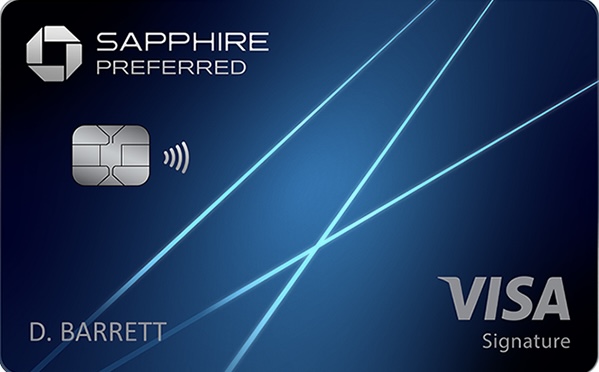
1. Chase Sapphire Preferred Card (CSP)
| Current Offer | 60,000 Bonus Points *after you spend $4,000 on purchases in the first 3 months |
| Annual Fee | $95 |
Point Categories
5X on Travel booked through Chase Travel
3X on restaurants, selector streaming and online groceries
2X UR’s on all other travel (outside of Chase Portal)
1X on everything else
10% points bonus at the end off full year and after fee is paid
What We Think
This is probably the best first card if you are starting out in the travel game. For $95/year, you unlock the full Chase Ultimate Rewards transfer partner list — Hyatt, United, Southwest, Air Canada Aeroplan, British Airways, Air France/KLM Flying Blue, and more. That single benefit is what separates it from every “cash back” card at the same price point. A 60,000-point welcome bonus plus $4,000 in required spend gets you roughly 63,200 UR points, which is enough for two nights at almost any Category 4 Hyatt (like the Hyatt Regency Aruba or Andaz Savannah), or a one-way business class flight on partners like Aer Lingus to Ireland. Read our full Chase Sapphire Preferred 2026 review for the exact math and redemption examples we’ve personally used.
| Read More | Apply Now |
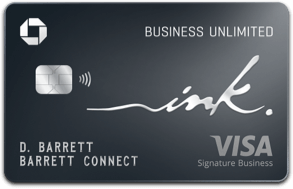
2. Chase Ink Business Unlimited Card (CIU)
| Current Offer | 75,000 ($750 Cash Back) Bonus Points *after you spend $6,000 on purchases in the first 3 months |
| Annual Fee | $0 |
Point Categories
1.5X on everything
What We Think
This is a great card that comes with a nice sign up bonus and 1.5X on everything makes it a great full business use card. Additional perks include 40,000 bonus points if you refer another business. On its own, the “cash back” branding is misleading — pair the Ink Unlimited with any Sapphire card (Preferred or Reserve) and those 75,000 points instantly become transferable Ultimate Rewards, which is where the real value lives. A very common eligible “business” is freelancing, reselling, tutoring, dog walking, or a side hustle you already do — you don’t need an LLC or EIN to apply. This is usually the second Chase card most beginners get after the Sapphire Preferred.
| Read More | Apply Now |
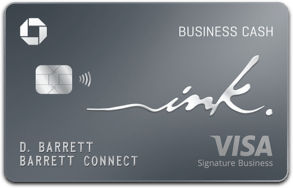
3. Chase Ink Business Cash Card (CIC)
| Current Offer | 75,000 ($750 Cash Back) Bonus Points *after you spend $6,000 on purchases in the first 6 months |
| Annual Fee | $0 |
Point Categories
5X on the first $25,000 spent in combined purchases at office supply stores and internet/cable/phone services.
2X on first $25,000 spent at gas stations and restaurants each anniversary year.
1X on everything else.
What We Think
Although the welcome bonus is advertised as cash, you can transfer/redeem this bonus as Chase UR’s if you have a qualifying UR card. Additional perks include 40,000 bonus points if you refer another business. The 5X on office supply stores is the sneaky-good category — Staples and Office Depot sell gift cards for dozens of brands (Amazon, Home Depot, restaurants, hotels), which effectively lets you earn 5X on almost any purchase. Between this card and the Ink Unlimited, most beginners stack two $0-annual-fee Ink cards for a combined 150,000 UR points in a single year without paying a cent in fees.
| Read More | Apply Now |
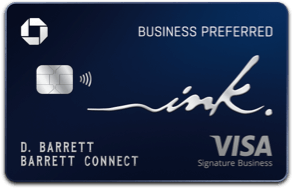
4. Chase Ink Business Preferred (CIBP)
| Current Offer | 100,000 Bonus Points *after you spend $8,000 on purchases in the first 3 months |
| Annual Fee | $95 |
Point Categories
3X on every dollar for the first $150K spent on travel, shipping, internet/cable/phones and ad purchasing for social media sites/search engines.
1X on everything else.
What We Think
Great for those who have a large upcoming expense for their business. Also a great card that allows you to earn UR’s. Additional perks include 40,000 bonus points if you refer another business. The 100,000-point welcome bonus is the biggest of any card on this list — enough for round-trip business class on Air Canada Aeroplan to Europe from the East Coast (typically 70,000 miles one-way on partners like Lufthansa or SWISS in off-peak windows), or 10+ free nights at a Category 1 Hyatt. It also includes cell phone protection (up to $1,000 per claim, $100 deductible) when you pay your monthly bill with the card, which alone can offset the $95 fee.
| Read More | Apply Now |
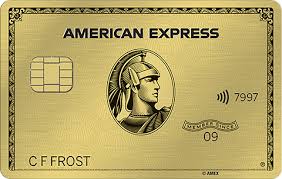
5. American Express Gold Card (Personal)
| Current Offer | 60,000 Bonus Points *after you spend $6,000 on purchases in the first 6 months |
| Annual Fee | $250 |
Point Categories
4X at restaurants and supermarkets (on up to $25K per year)
3X on flights booked directly with airlines or on Amextravel.com
1X on everything else.
What We Think
Although it comes lower on the list, you may apply for this card if you are already over the Chase 5/24 rule. The $250 fee might seem steep, but the additional $10/month in Uber/Grubhub credits make up for it.
The 4X on groceries and dining is a great way to earn spend points as these usually make up a fair portion of the average persons monthly budget. On top of Uber Cash, current Amex Gold benefits also include a $120 dining credit (broken into $10/month at select partners like Grubhub, Cheesecake Factory, and Goldbelly) and $84 in Dunkin’ credits ($7/month). Amex Membership Rewards transfer to airline partners Chase doesn’t have — most notably Delta SkyMiles, ANA (a killer program for premium cabin awards), and Avianca LifeMiles. If you’re deciding whether the fee actually pencils out for your spending, our 2026 Amex Gold review walks through the exact break-even math.
| Read More | Apply Now |
Earning the points is the easy part. Finding somewhere worth spending them is where most balances sit untouched for years. Search award space on Seats.aero to see what your balance books right now.


Before you book: check the award space
Search millions of award seats across airlines, and get alerts when the flights you want become available.


 +80
Free to search · alerts are paid · partner link
What to Do With Your Points Once You’ve Earned Them
Earning the welcome bonuses is only half the game. If you follow the order above — Sapphire Preferred, then Ink Unlimited, then Ink Cash, then Ink Preferred — you can realistically end year one with 310,000+ Chase Ultimate Rewards points plus your regular spend. That’s enough for a family of four to fly domestic round-trip on Southwest, spend a week at a Category 1-4 Hyatt, or send two people to Europe in economy. For a concrete look at where those points actually go the furthest, see our roundup of the top travel destinations with transfer partners — it maps specific point balances to specific trips so you can reverse-engineer which cards to open first.
Frequently Asked Questions
What is the Chase 5/24 rule and does it apply to business cards?
Chase generally won’t approve you for a new card if you’ve opened 5 or more personal credit cards from any issuer in the previous 24 months. You still need to be under 5/24 to be approved for a Chase Ink business card, but once approved, the Ink card itself does not report to your personal credit bureaus and therefore doesn’t add to your 5/24 count. That’s why beginners can stack multiple Ink cards without locking themselves out of Chase.
Do I need a real business to apply for a Chase Ink card?
You need a legitimate business activity, but not an LLC, EIN, or storefront. Freelancing, reselling on eBay, tutoring, driving for Uber, pet sitting, or any side hustle qualifies as a sole proprietorship. You’d apply using your legal name as the business name and your Social Security Number as the tax ID. Only apply if you actually do the activity — misrepresenting a business on a credit application is fraud.
Which card should I get first as a total beginner?
The Chase Sapphire Preferred is almost always the right first card. It gives you full access to Chase’s transfer partners (which is what lets you unlock outsized redemptions), only costs $95/year, and its 60,000-point welcome bonus is enough for a meaningful first free trip on its own. You’d then layer in a Chase Ink business card as your second application.
Are Chase Ultimate Rewards points really worth more than cash back?
Yes — but only when you transfer them to airline or hotel partners. Redeemed as straight cash back, 1 UR point = 1 cent. Redeemed through Chase Travel with a Sapphire card, it’s 1.25 cents. But transferred to World of Hyatt, points routinely return 2-3+ cents per point in value, and transfers to airline partners like Air Canada Aeroplan or Air France/KLM Flying Blue for business class can hit 5-8 cents per point on the right redemption.
Should I get the Amex Gold before or after the Chase cards?
After. Chase’s 5/24 rule is the tightest gate in the hobby, so you always want to open Chase cards first while you’re still eligible. Amex doesn’t have an equivalent restriction — you can apply for an Amex Gold at any time. The only reason to jump straight to the Amex Gold is if you’re already over 5/24 and don’t want to wait for cards to fall off your report.
 elevatemiles

Newsletter
Travel using fewer points with advanced strategies
I send what is actually worth acting on: new transfer bonuses, award space worth booking, and the mistakes that quietly cost people their points.
Free forever · unsubscribe in one click
What that balance actually books
Earning the points is the easy part. Whether they turn into a seat depends on flight award space, which no transfer chart or earning guide will tell you. Seats.aero searches every major program at once so you can see what your balance books on real dates.